
Chronic Pain & Hospice Care
Together until the very end
Overview
Arthritis, disc disease, cancer pain in senior patients — these may not be curable. But 'they're old, so nothing can be done' is not an answer. With proper pain management, patients can walk again and wag their tails.
Our chronic pain and hospice care focuses not on extending life, but on improving the quality of remaining time — for both the patient and the family.
What Makes Us Different
Quality-of-Life Focused
We prioritize comfortable days over aggressive treatment. Pain scoring objectively measures management effectiveness.
Support for Families
Preparing for a a companion's final days is hard for families too. We walk alongside owners through medical decisions and emotional support.
Symptoms to Watch For
Our Process
Pain Assessment
Objective pain scoring using validated clinical tools
Management Plan
Set goals with owner + combined pharmaceutical and non-pharmaceutical plan
Start Pain Control
Analgesics + nerve blocks if needed + environmental modification guidance
Regular Reassessment
Pain score tracking + plan adjustment + owner counseling
Related case reports
 Case ReportsBeforeAfter
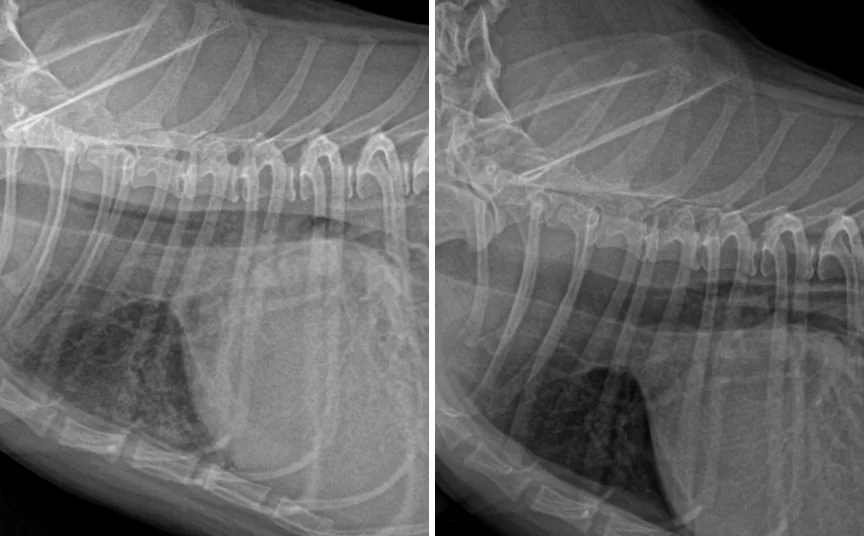
Dog Pulmonary Edema: From Coughing Emergency to Stable Care
Juri, a 12-year-old dog with early heart disease, came in with a worsening cough. Raised proBNP and chest X-rays showed pulmonary edema from heart disease. Emergency diuretics with pain relief and sedation stabilized her breathing, and she remains stable on heart medication.
 Case ReportsBeforeAfter
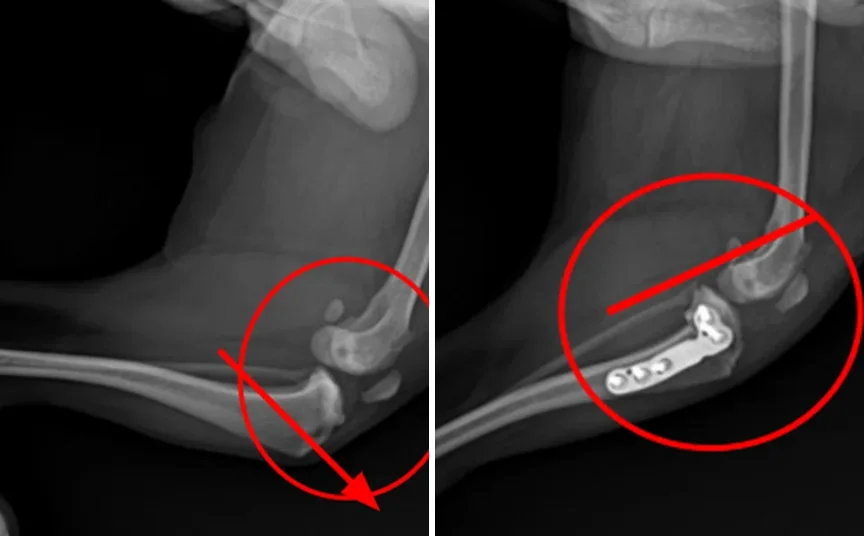
TPLO Surgery in Dogs: Why Pain Management Matters
Wawa, a 6-year-old Chihuahua with patellar luxation, suddenly began limping on her left hind leg. A cruciate ligament rupture was treated with TPLO, stepwise pain care and rehabilitation, and she was walking close to normal four months later.

Wobbly Legs in a Dog? Safe Pain Care Even With Heart Disease
Gaeul, a 15-year-old Pomeranian, was a senior dog for whom analgesics were hard to prescribe because of heart disease. This case shows how her chronic joint pain — from bilateral patellar luxation and hip and spinal changes — was safely managed with a pain-care injection that places minimal burden on the body.