
Before and after treatment
Chest X-ray (side view)
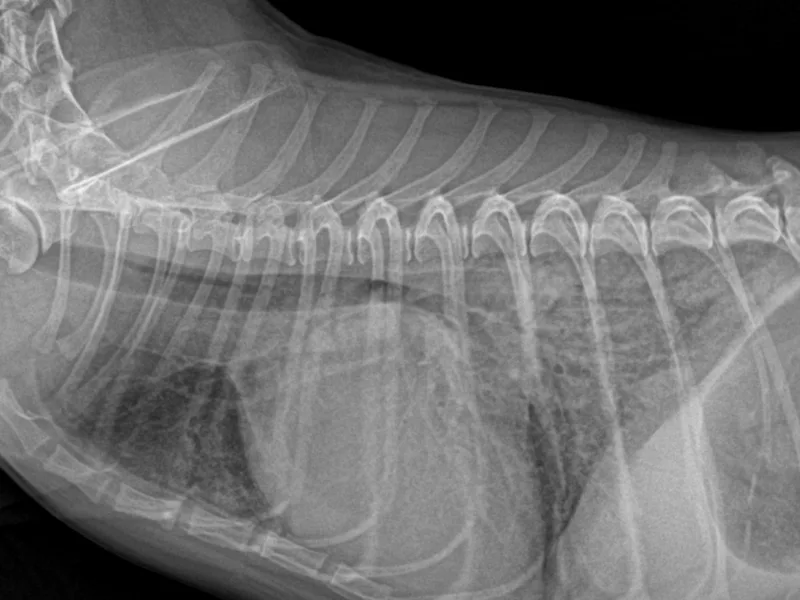
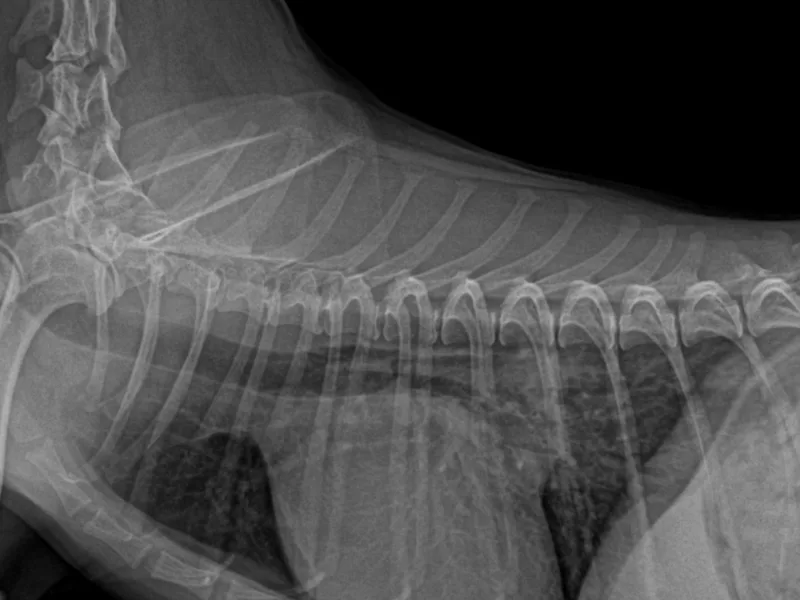
Left: hazy lungs from pulmonary edema / Right: clearer lungs after treatment
Key points
- Patient: 12-year-old dog with a heart murmur history
- Diagnosis: pulmonary edema from heart disease
- Treatment: emergency diuretics with pain relief and sedation
- Outcome: stable on heart medication
Why do dogs get pulmonary edema?
Pulmonary edema means fluid builds up in the lungs, making breathing difficult. In dogs it is most often linked to heart disease: as the heart weakens, blood backs up, pressure in the lung vessels rises and fluid leaks into the lung tissue. Valve disease is common in older small dogs, so edema often appears as heart disease progresses.
It usually starts with a mild cough, then breathing becomes faster and the dog tires easily. Edema can worsen quickly, so a heart patient that coughs more or breathes differently should be checked promptly.
How was Juri when she came in?
| Patient | Juri (pseudonym), 12-year-old female dog |
|---|---|
| History | Earlier checkup flagged early heart disease |
| Signs | A hacking cough that had clearly increased |
How did we tell whether the cough came from the heart?
- Physical exam: a heart murmur, and coughing when the trachea was touched.
- Blood test: proBNP, a marker of heart strain, was far above normal.
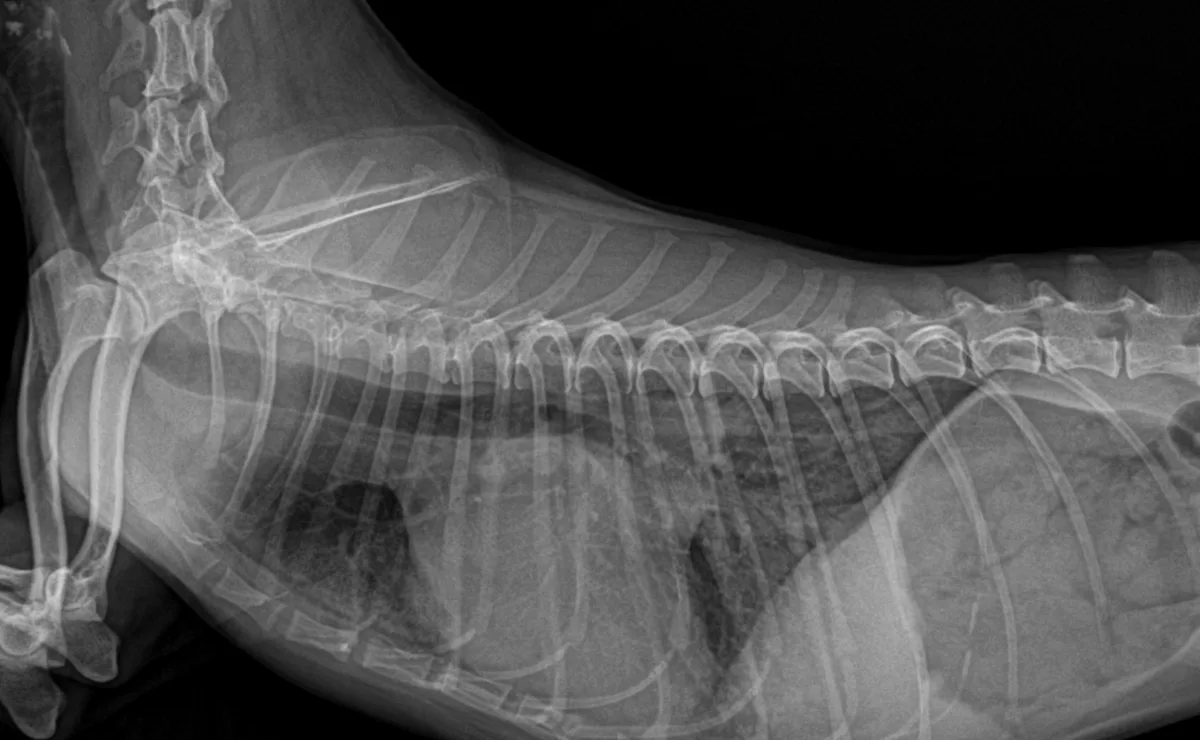
- Chest X-ray: an enlarged heart outline and hazy lungs suggesting edema.
| Test | Result | Reference | Meaning |
|---|---|---|---|
| proBNP | 6,978 pmol/L | 0–900 | High pressure inside the heart and heavy strain on the heart muscle |
Chest X-rays at the first visit: enlarged heart outline and hazy lungs.
Putting the cough, murmur, X-rays and proBNP together, we diagnosed pulmonary edema caused by progressing heart disease.
How was the edema treated?
1. Emergency care: clearing fluid from the lungs
Juri was hospitalized and given diuretics so the fluid could leave through the urine. Her urine output rose and she lost about 200 g, a sign the excess fluid was clearing, and her breathing gradually eased.
2. Relieving fear and pain
Struggling to breathe is frightening and painful, and anxiety makes breathing even faster. We used pain relief and sedation so Juri could recover calmly. At Nuel, pain management is part of every treatment, including emergencies.
3. Maintenance: preventing relapse
Once the crisis passed, we continued with a medication that supports heart contraction and a diuretic to keep fluid from building up again.
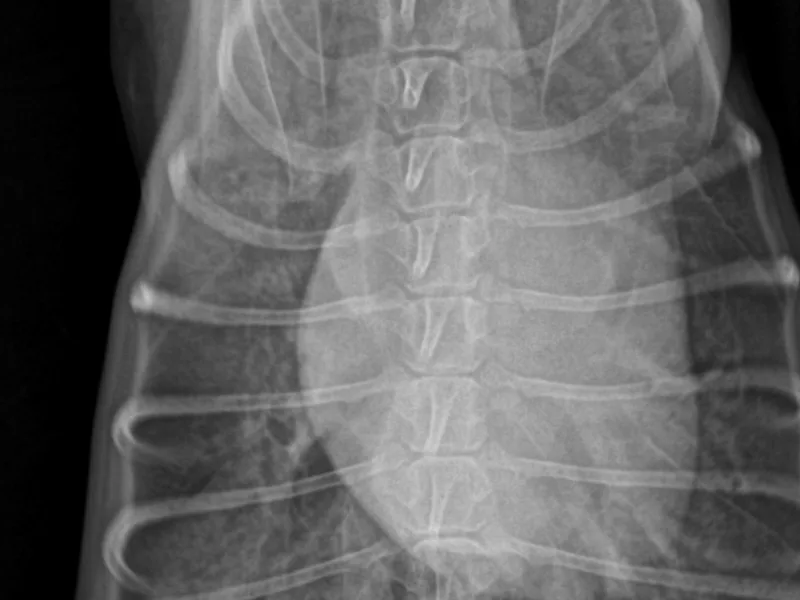
Chest X-rays before and after
Left: first visit / Right: clearer lungs at recheck
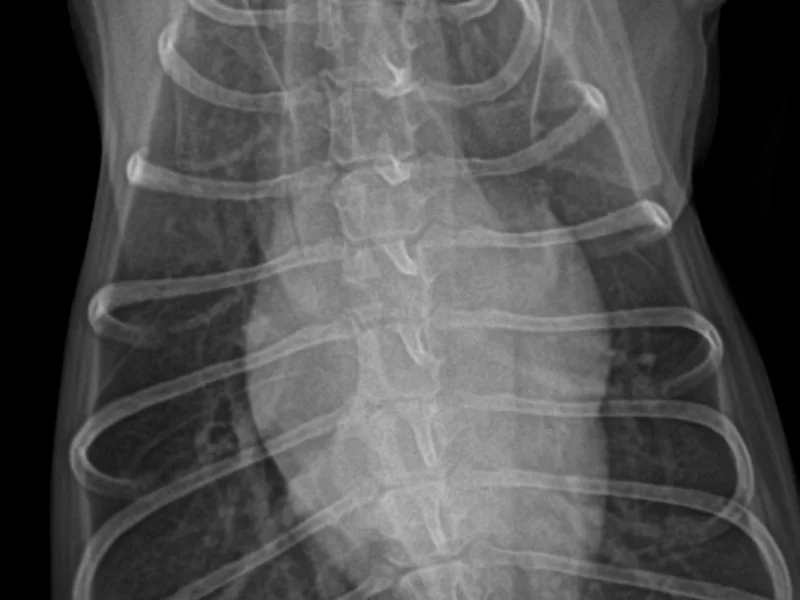
Belly view: the lungs look clearer at recheck.
At recheck her resting breathing rate was 13–14 breaths per minute. She has had no relapse so far, remains stable on heart medication and comes in for regular checkups.
How to care for a dog with heart disease at home
- Count resting breaths: count breaths for one minute while your dog sleeps. If the number keeps rising, come in right away.
- Watch appetite and energy: these can also signal more strain on the heart.
- Do not stop medication on your own, even when your dog seems better.
- Regular checkups let us adjust doses to the heart's condition.
A word from the director
Heart disease often progresses slowly, but small signs like coughing or changes in breathing can tell us it is moving forward. Pulmonary edema is not only hard on the lungs; it causes real fear and stress, so we apply our pain management protocol even during emergency care to help patients breathe as comfortably as possible. With timely tests and treatment, dogs like Juri can return to a stable daily life. If a dog with heart disease starts coughing or breathing faster than usual, please have it checked soon.