
⚠️ This post contains surgical photos. They are hidden and shown only if you choose to open them.
Before and after surgery
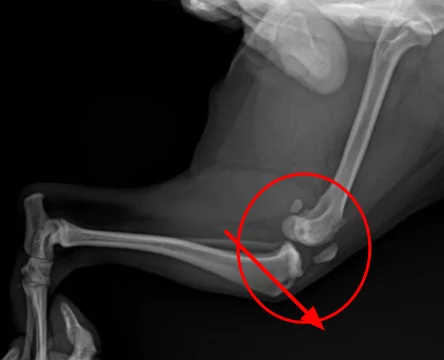
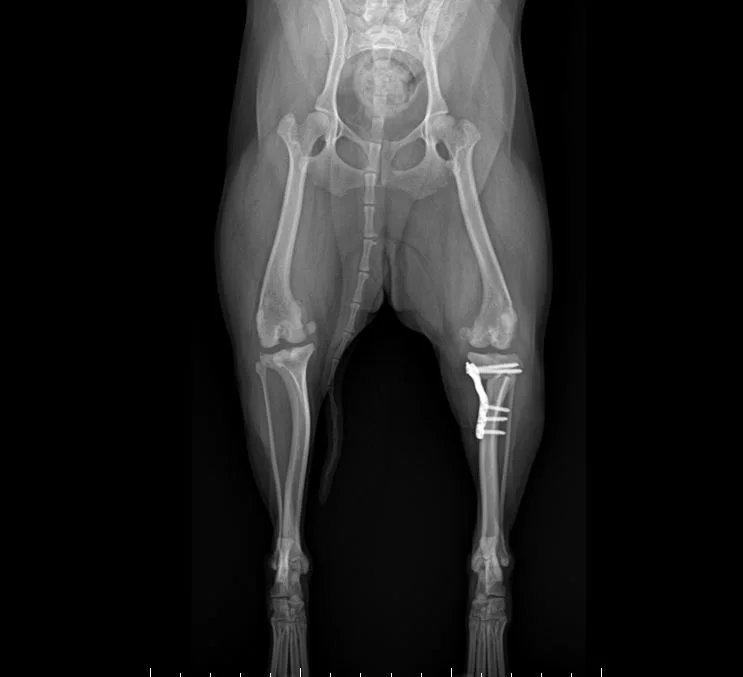
Knee X-ray (left hind leg)
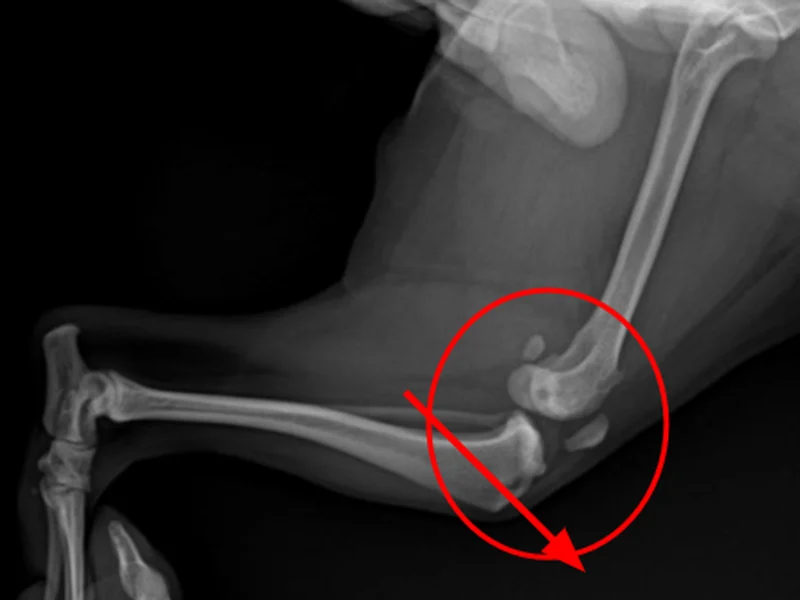
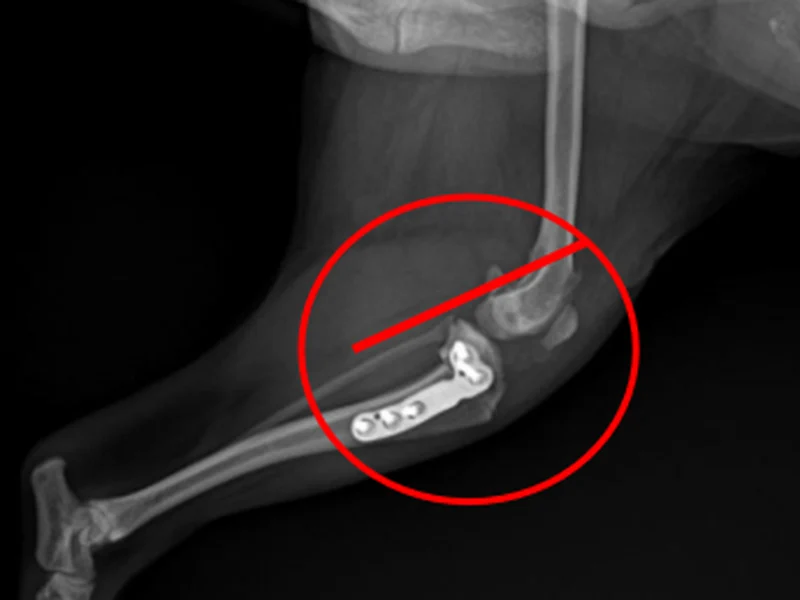
Left: the tibia pushed forward / Right: joint angle corrected and fixed with a plate after TPLO
Walking
Left: lameness at presentation / Right: walking 4 months after surgery
Key points
- Patient: 6-year-old Chihuahua with patellar luxation
- Signs: sudden left hind leg lameness
- Treatment: TPLO surgery with stepwise pain care
- Outcome: walking normally 4 months after surgery
What is a cruciate ligament rupture in dogs?
The cranial cruciate ligament connects the thigh bone and shin bone inside the knee. It can tear from repeated small injuries, age-related weakening, excess weight, or sudden turns and jumps. Affected dogs limp or refuse to put weight on the hind leg, avoid walks and stairs, and may develop knee swelling. Overloading the other leg often leads to rupture on both sides.
What was Wawa's condition?
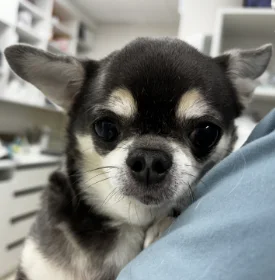
| Patient | Wawa (alias), 6-year-old female Chihuahua |
|---|---|
| Signs | Sudden left hind leg lameness, unable to bear weight on one leg |
How was it diagnosed?
- Physical exam: patellar luxation in both knees
- Drawer test: the left knee shifted forward far more than the right
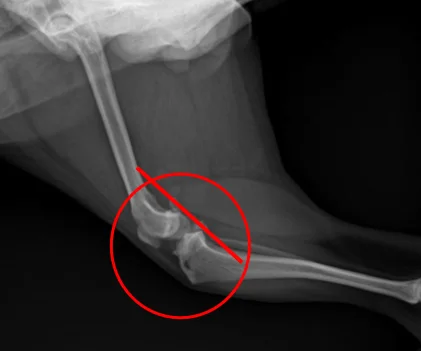
- X-rays: the left tibia was displaced forward — a typical sign of cruciate rupture
How is it treated surgically?
| Procedure | Method | Notes |
|---|---|---|
| Lateral suture | A strong suture stabilizes the joint in place of the ligament | Mainly for small, light dogs |
| TPLO (tibial plateau leveling osteotomy) | The top of the tibia is cut, rotated and fixed with a plate | Changes the knee's mechanics so it is stable without the ligament; longer recovery and higher cost |
Dogs have a steeper tibial plateau than people, so weight bearing pushes the tibia forward. TPLO levels this slope to make the knee stable. After a full discussion with the owner, Wawa had TPLO surgery.
⚠️ Surgical photos — osteotomy and plate fixation. Tap to view
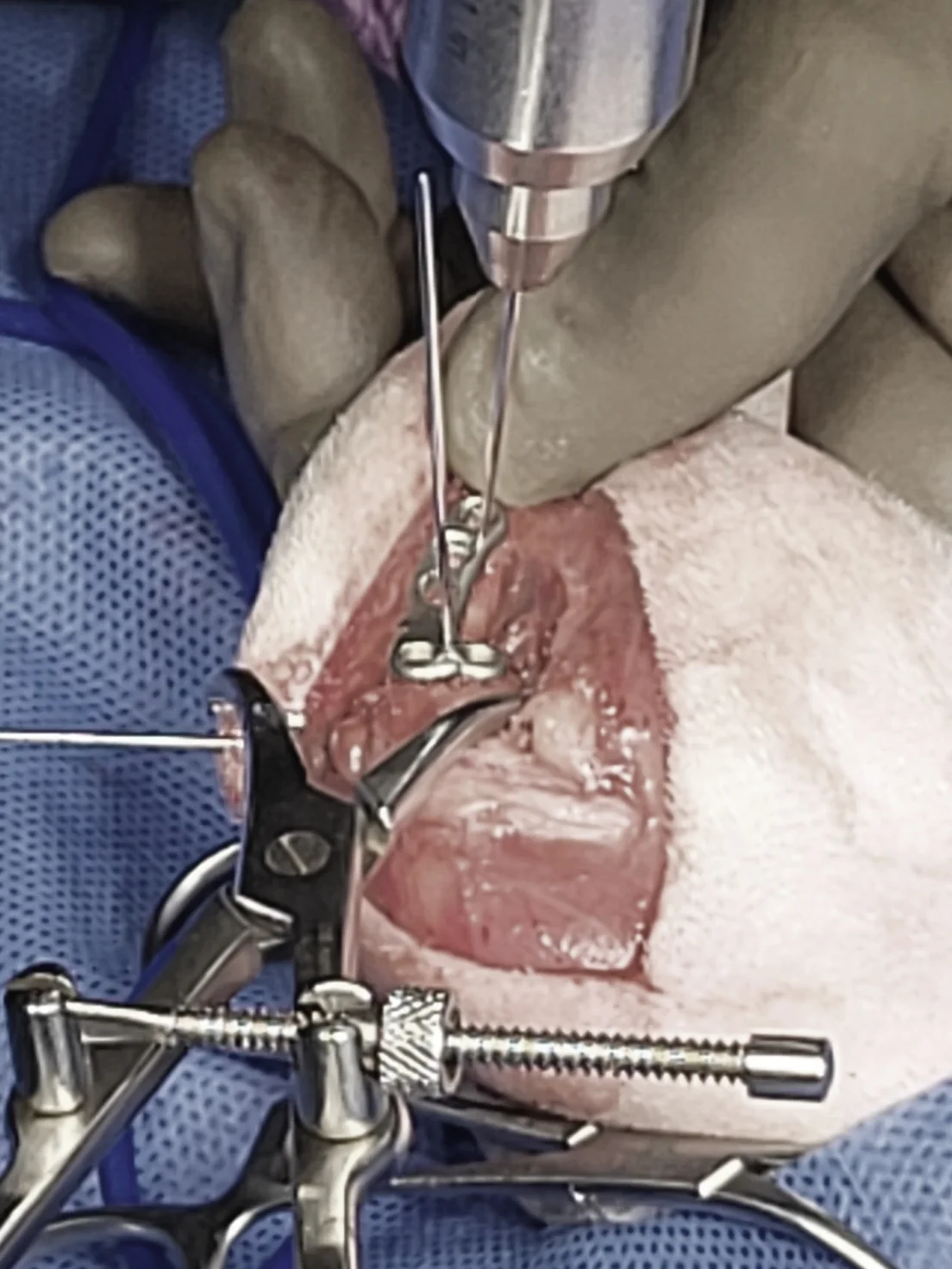
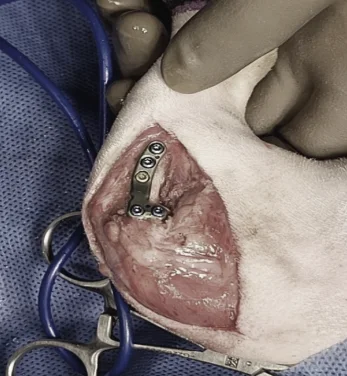
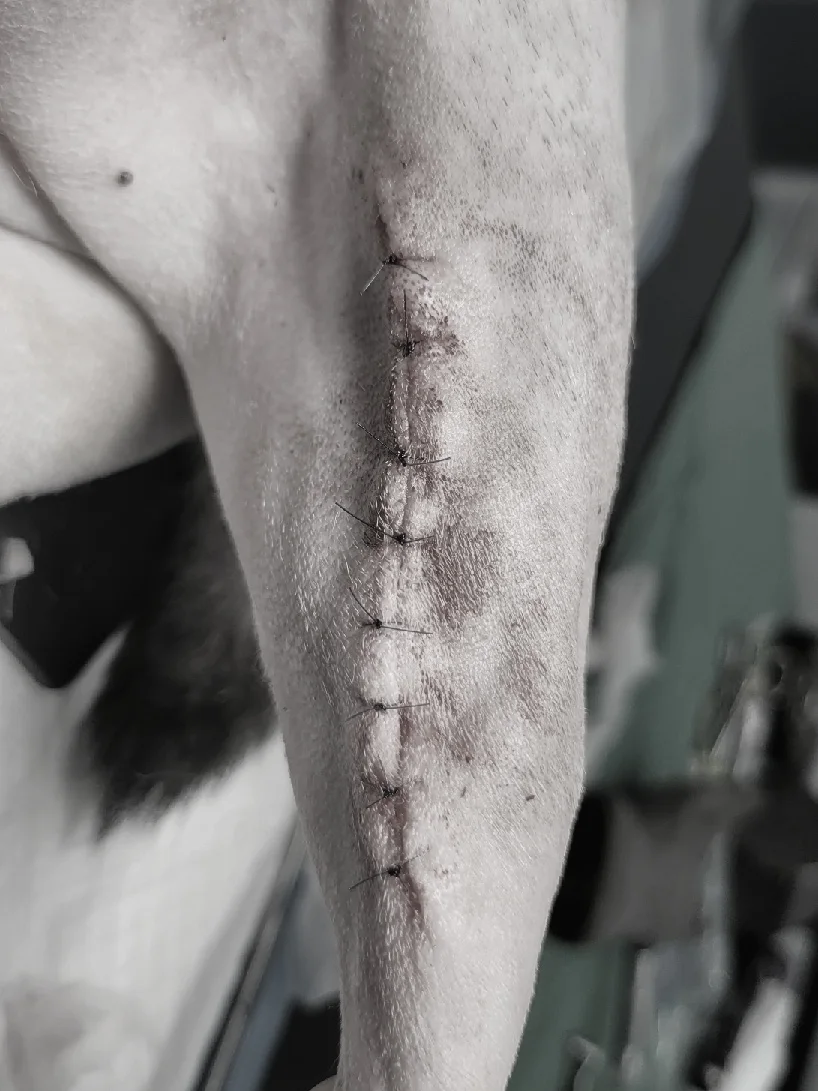
X-rays before and after surgery
Left: tibia displaced forward / Right: corrected and fixed with a plate
How was pain managed?
- A tailored pain plan before surgery
- Multimodal pain control during surgery, with a team member dedicated to pain management
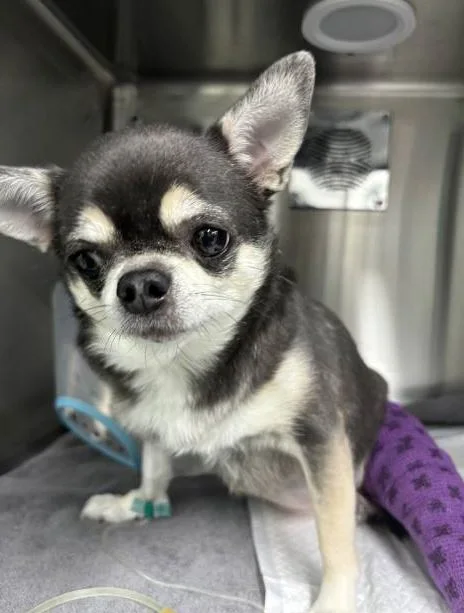
- Intensive pain care after surgery, with cold and warm compresses to reduce swelling and inflammation
- Ongoing pain management and rehabilitation after discharge
How did Wawa recover?
Rehabilitation, pain management and weight control began right after surgery. Four months later, Wawa was walking actively, close to normal.
Walking before and after
Left: lameness at presentation / Right: 4 months after surgery
Home care after surgery
- Two months of restricted activity — no running, slipping, standing on hind legs or sudden movements during baths
- Non-slip mats at home
- Regular rechecks for medication and rehabilitation
A word from the director
Small dogs with patellar luxation have weaker knees, so even a small impact can tear the cruciate ligament. If your dog suddenly stops using a hind leg, have it checked rather than assuming a sprain. Because TPLO involves cutting and fixing bone, pain management and rehabilitation matter as much as the surgery itself. Recovery varies between patients, but with good pain control and careful activity restriction we help dogs get back to comfortable walking.