
⚠️ This post contains tooth extraction photos. They are hidden and shown only if you choose to open them.
Before and after scaling
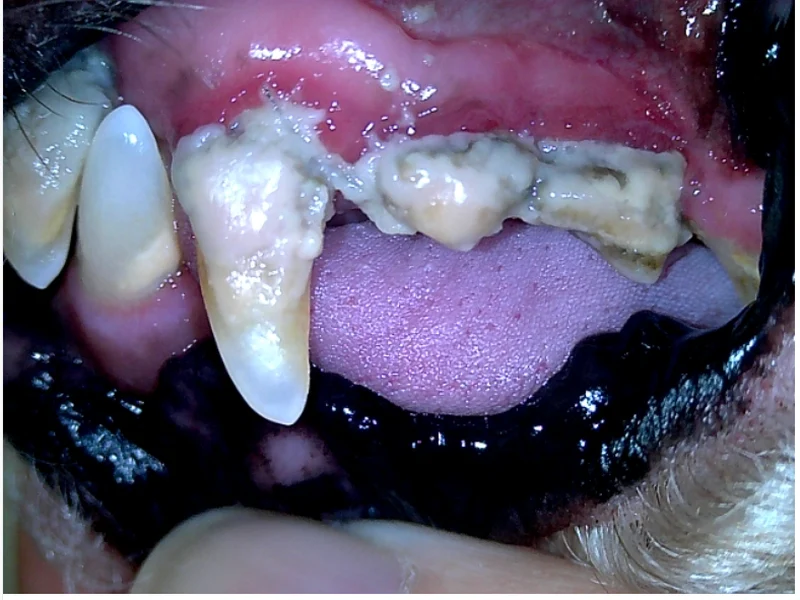
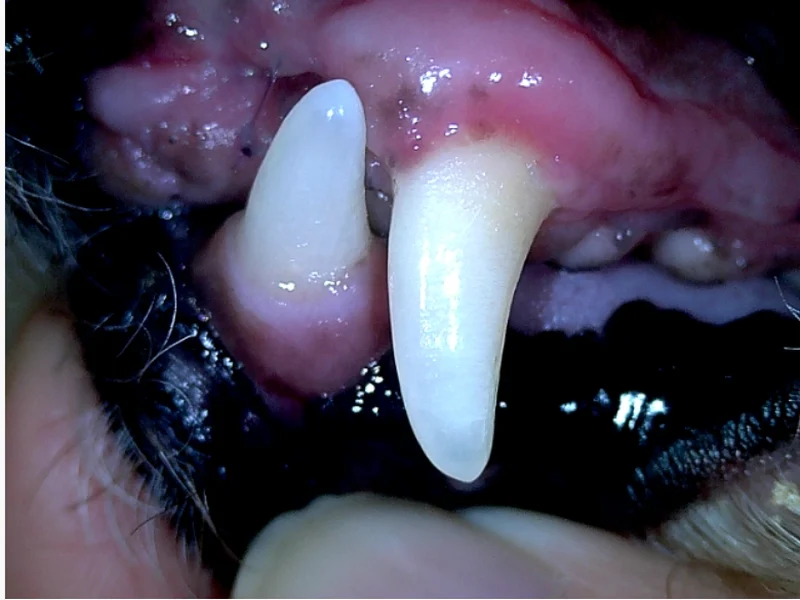
Left: thick tartar over the canine and molars / Right: clean teeth after scaling
Key points
- Patient: 12-year-old dog under care for MMVD
- Signs: poor appetite, bad breath
- Treatment: heart-tailored anesthesia, scaling and extractions
- Outcome: smooth recovery, eating more from the next day
Can a dog with heart disease have a dental cleaning?
Yes, after a thorough cardiac assessment, stabilization and an anesthetic plan tailored to the heart. Older dogs with heart disease can develop low blood pressure or arrhythmias under anesthesia, so assessment, drug choice and monitoring matter even more. At the same time, untreated periodontal infection can spread through the bloodstream and is more likely to affect the heart valves and muscle in cardiac patients.
What was Ruby's condition?
| Patient | Ruby (alias), 12-year-old female |
|---|---|
| History | Heart disease diagnosed elsewhere; transferred to us for heart medication and regular care |
| Signs | Reduced appetite, worsening bad breath |
| Owner's concern | "She's old and has heart disease — can she still have a dental cleaning?" |
What was checked before anesthesia?
- Physical exam: the known left-sided heart murmur
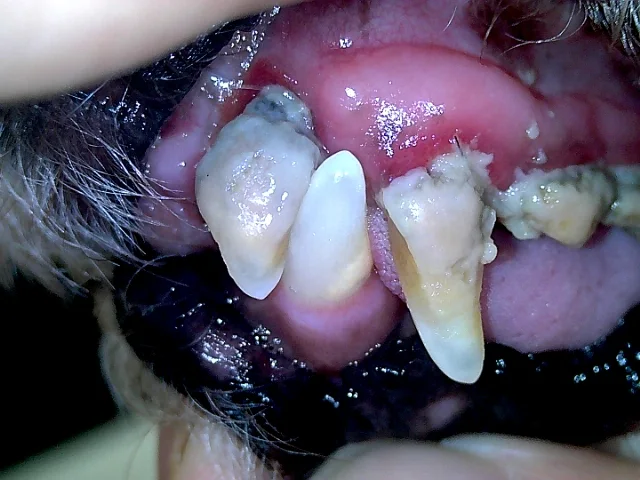
- Oral exam: heavy tartar and gum inflammation, exposed roots and loose teeth — severe periodontal disease
- Chest X-rays: no abnormal lung or airway findings
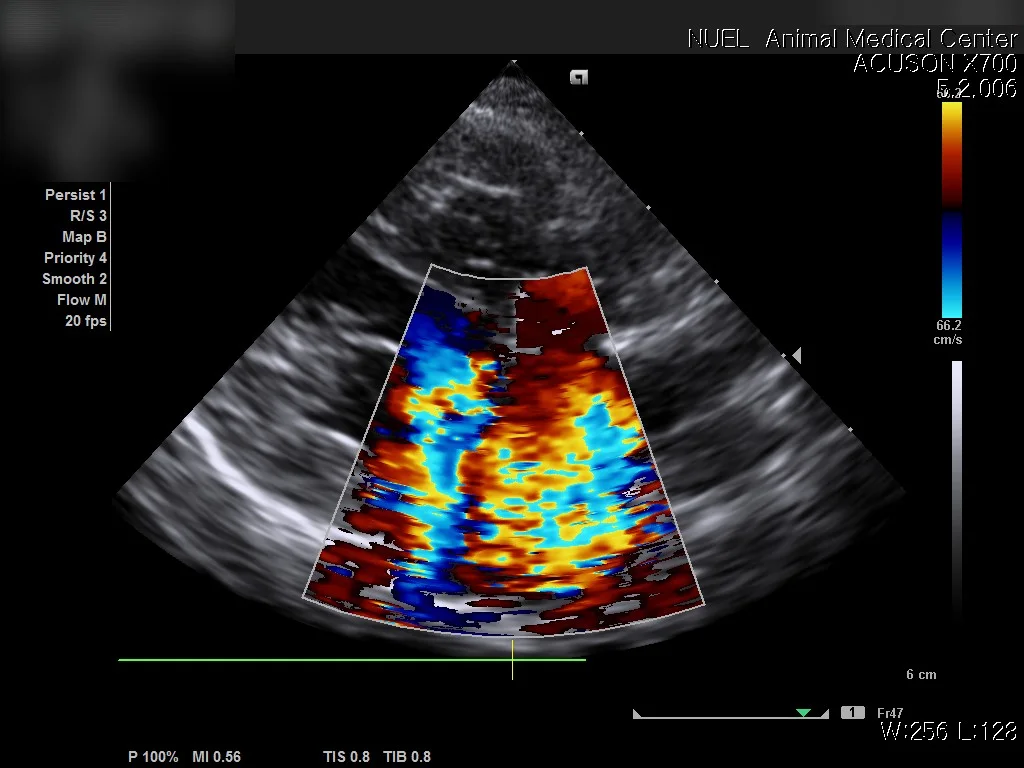
- Echocardiography: mitral regurgitation
- Blood tests: elevated proBNP; liver, kidney and glucose values normal
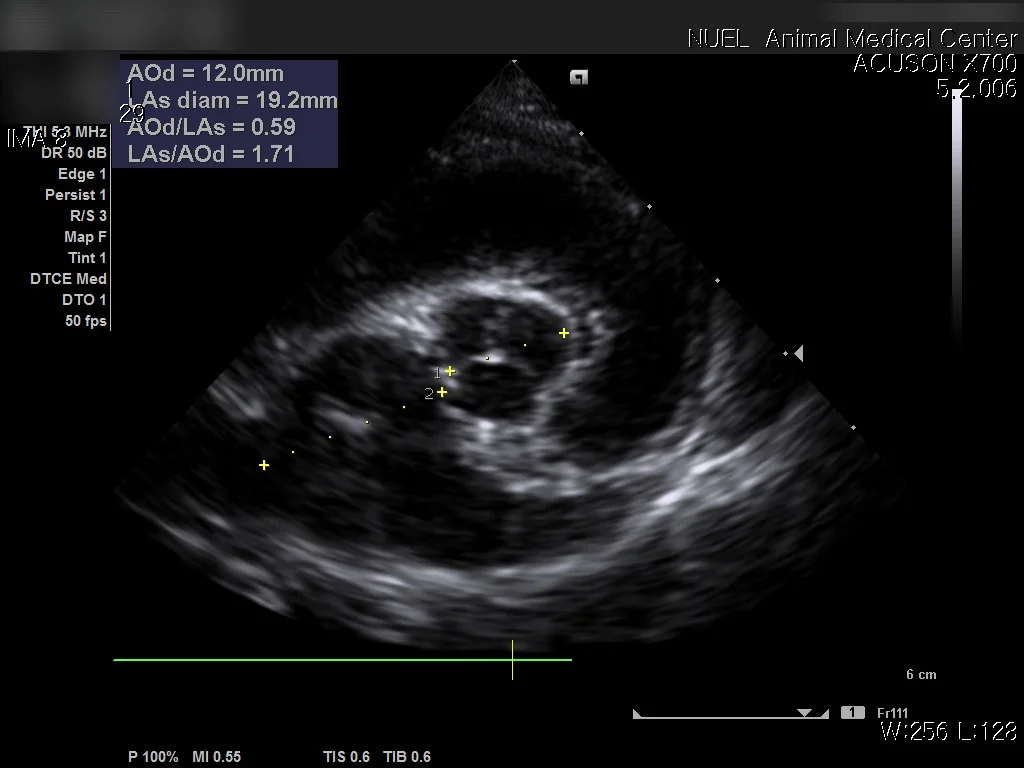
| Test | Result | Reference | Relevance |
|---|---|---|---|
| proBNP | 1,167 pmol/L ↑ | 0–900 | Cardiac strain present |
| ALB | 3.6 g/dL | 2.6–4.0 | Normal |
| ALT / ALKP | 30 / 219 U/L | 17–78 / 47–254 | Normal |
| CREA / BUN | 0.68 / 14.7 mg/dL | 0.4–1.4 / 9.2–29.2 | Normal |
| GLU | 113 mg/dL | 75–128 | Normal |
The heart still needed caution, but the mouth was too far gone to postpone treatment, so we proceeded carefully with full preparation and monitoring.
How was anesthesia managed?
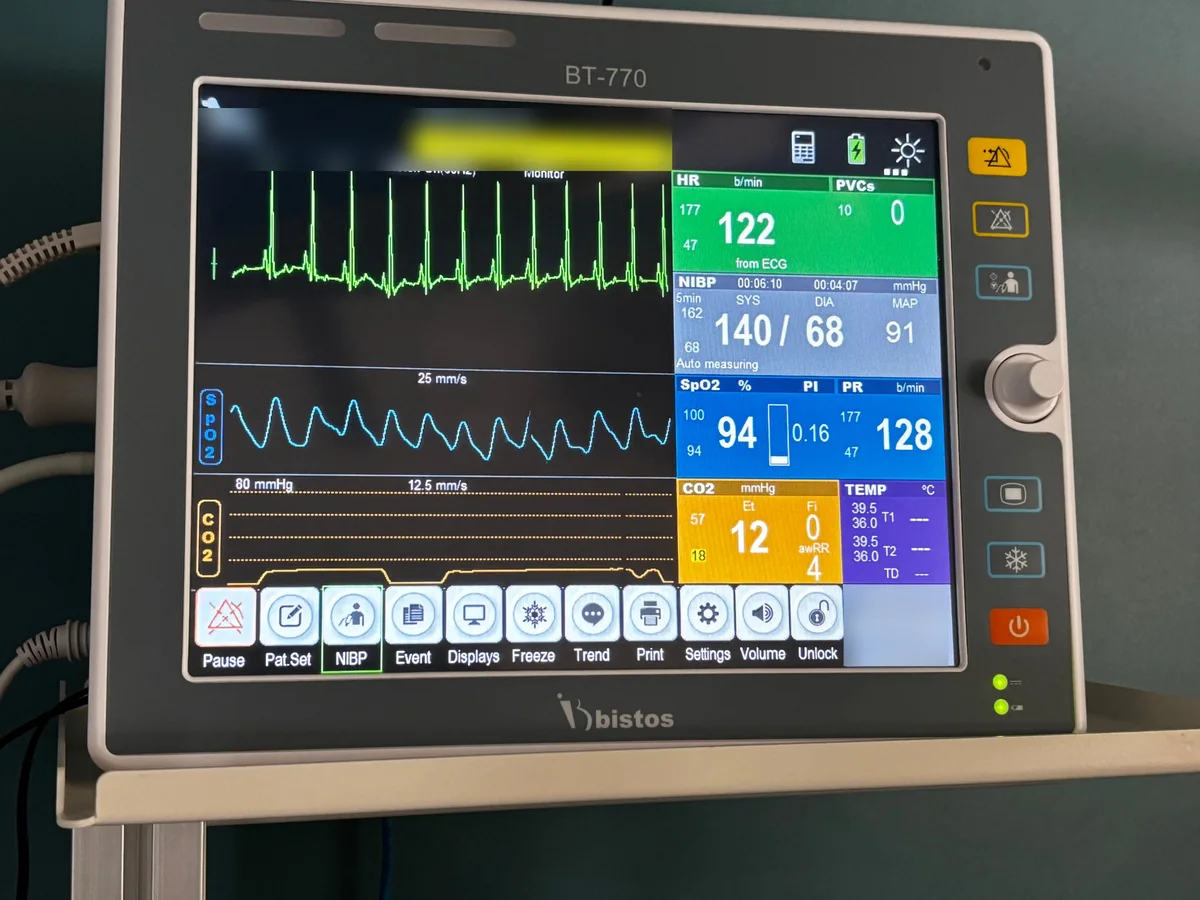
Drugs were chosen carefully for a cardiac patient to minimize side effects, and ECG, blood pressure, oxygen saturation and breathing were monitored throughout.
What dental treatment was done?
Dental X-rays showed moderate to severe periodontal disease. Teeth with damaged periodontal ligaments and weakened support could not be saved and were extracted.
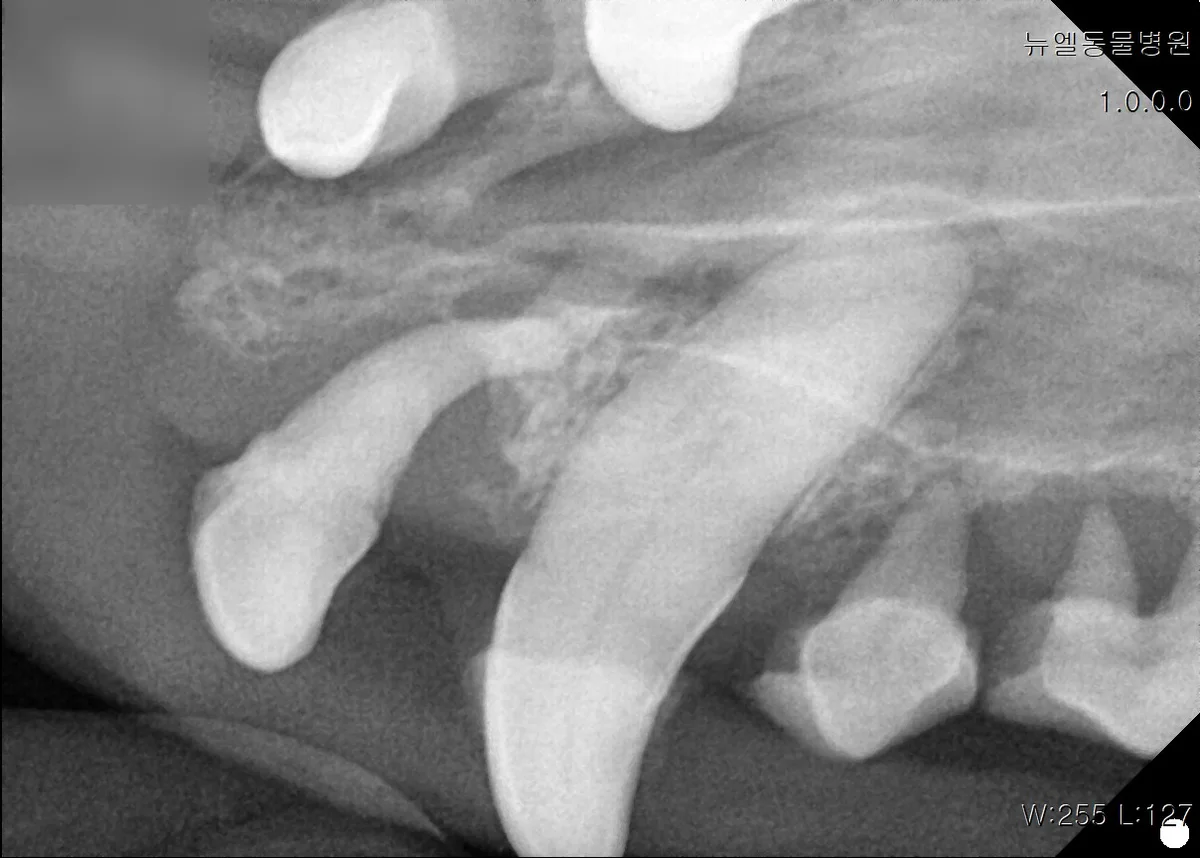
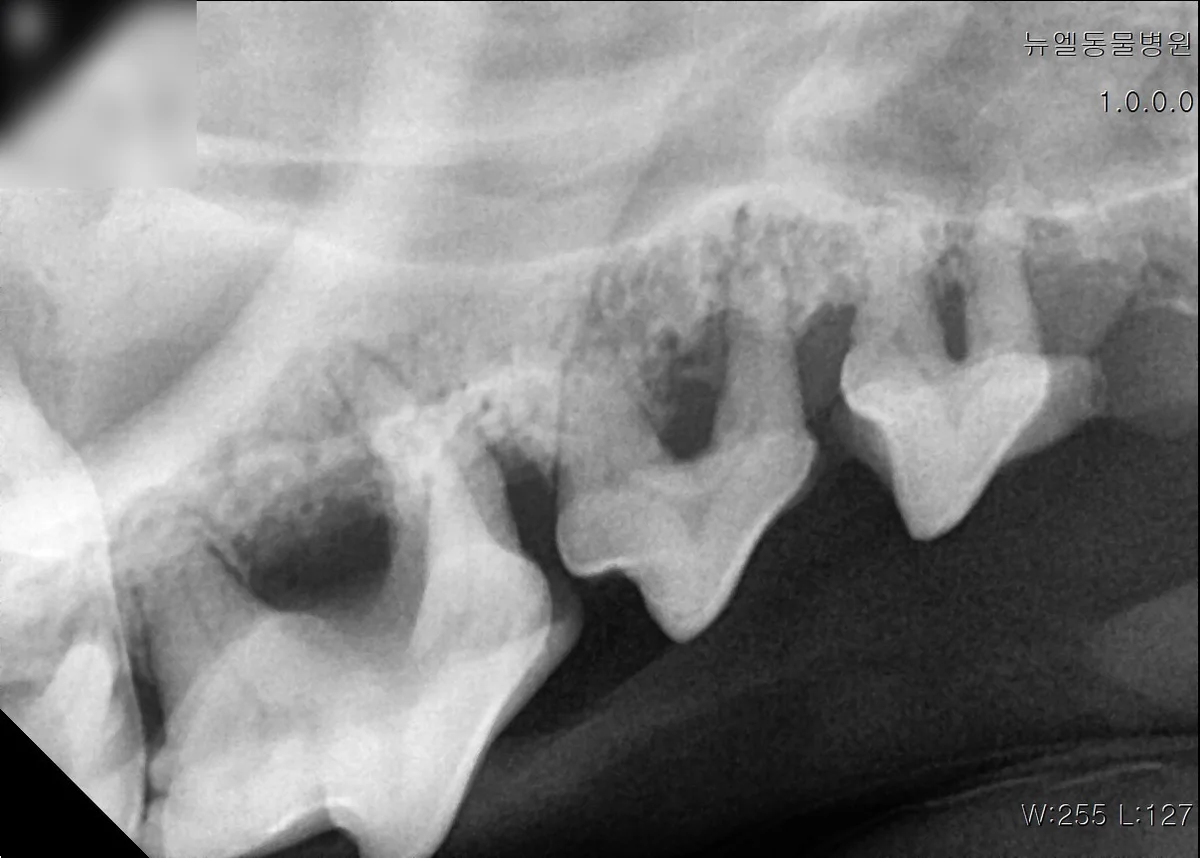
Scaling began with an ultrasonic scaler, removing tartar and inflammatory debris from tooth surfaces and below the gumline.
Teeth that could not be saved were then extracted, and the remaining teeth were polished to slow new tartar buildup.
⚠️ Extraction photos — tap to view
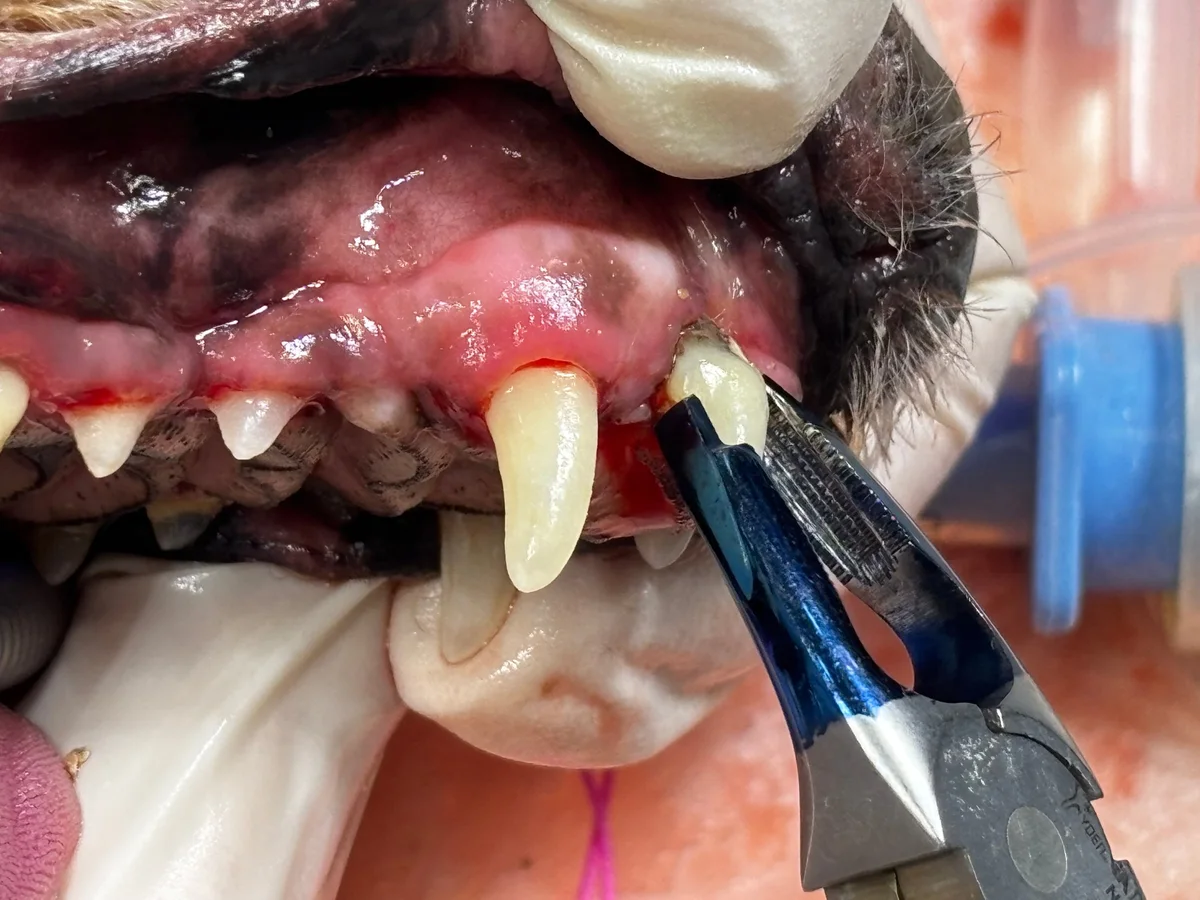
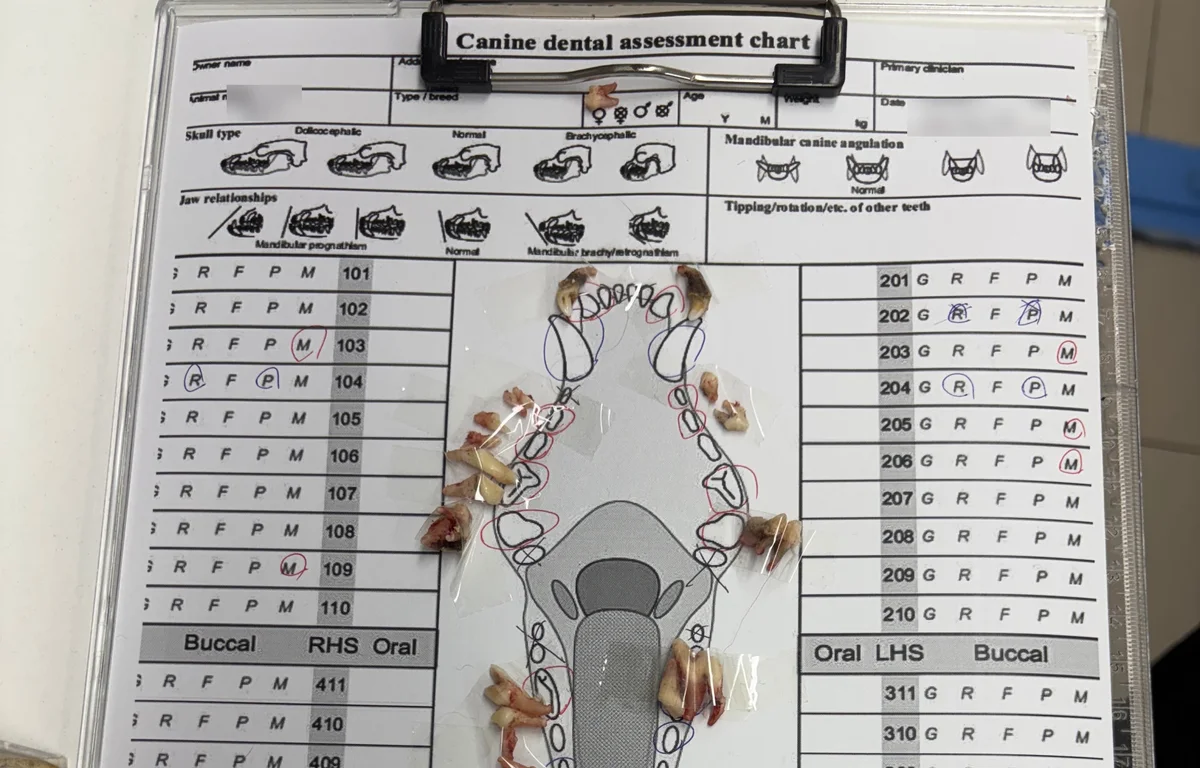
Before and after scaling
Left: thick tartar over the canine and molars / Right: clean teeth after scaling
How was the recovery?
Ruby recovered smoothly from anesthesia with little bleeding or pain and went home without difficulty. From the next day her appetite and activity gradually improved, and her heart function showed no sudden changes.
After treatment
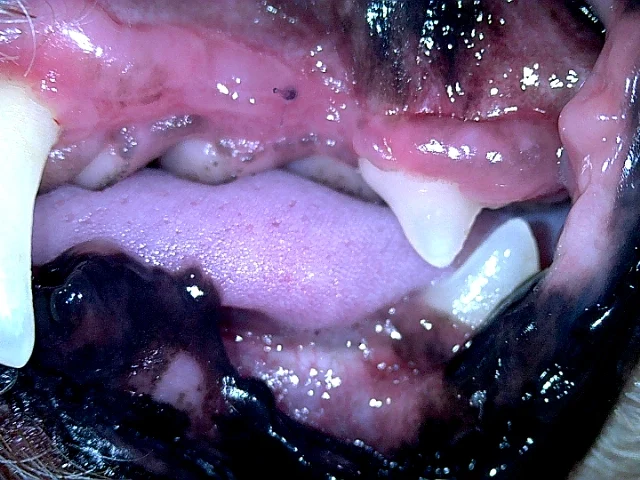
Clean teeth and gums after scaling and extractions
Follow-up care
- Echocardiography and blood tests every 3–4 months with medication adjustments
- Come in promptly for reduced appetite, coughing or lower activity
- Regular brushing, oral checks and dental cleanings, since tartar returns over time
A word from the director
Older dogs with heart disease can still have anesthesia and dental care when their condition is assessed and prepared for in advance. No anesthesia is 100% safe, so we focus on reducing risk with cardiac-specific protocols and monitoring. Managing the heart and the teeth in the same hospital lets us plan both together.