
⚠️ This post contains surgical photos. They are hidden and shown only if you choose to open them.
Key points
- Patient: 6-year-old male, recurrent diarrhea and poor appetite
- Diagnosis: hypoalbuminemia → chronic enteropathy confirmed by biopsy
- Treatment: anti-inflammatory medication, albumin transfusions, regular monitoring
- Outcome: well managed over the long term
What is hypoalbuminemia in dogs?
Hypoalbuminemia means the blood level of albumin, a protein that holds water inside blood vessels, is below normal. When it falls, fluid leaks out of the vessels and can collect in the abdomen (ascites) or around the lungs (pleural effusion), and the face or legs may swell. It often starts with mild signs such as diarrhea or poor appetite but can progress to a swollen belly, weakness and breathing difficulty.
What causes low albumin?
- Reduced production by the liver
- Loss through the gut, as in protein-losing enteropathy caused by intestinal inflammation
- Loss through the kidneys into the urine
Treatment depends entirely on the cause, so the first step is finding where the protein is being lost.
What was Ara's condition?
| Patient | Ara (alias), 6-year-old male |
|---|---|
| History | Declining condition after hospitalization for pancreatitis |
| Signs | Recurrent diarrhea, poor appetite |
| Reason for visit | Hypoalbuminemia diagnosed during hospitalization at another 24-hour hospital, with values that would not stabilize; referred for long-term management and monitoring |
How was the cause found?
| Test | Result | Reference | Relevance |
|---|---|---|---|
| ALB (albumin) | 1.9 g/dL ↓ | 2.6–4.0 | Low protein that holds water in the vessels |
| CRP (inflammation) | 11 mg/L ↑ | 0–9 | Active inflammation |
The results pointed to protein loss with inflammation rather than simple malnutrition. Together with recurrent diarrhea and the course after pancreatitis, protein loss through an inflamed intestinal lining was considered most likely.
Because treatment would mean long-term steroids and immunosuppressants, we discussed it with the owner and performed an exploratory laparotomy with intestinal biopsy before starting these drugs — the most accurate way to diagnose chronic enteropathy.
⚠️ Surgical photos — exploratory laparotomy and intestinal biopsy. Tap to view
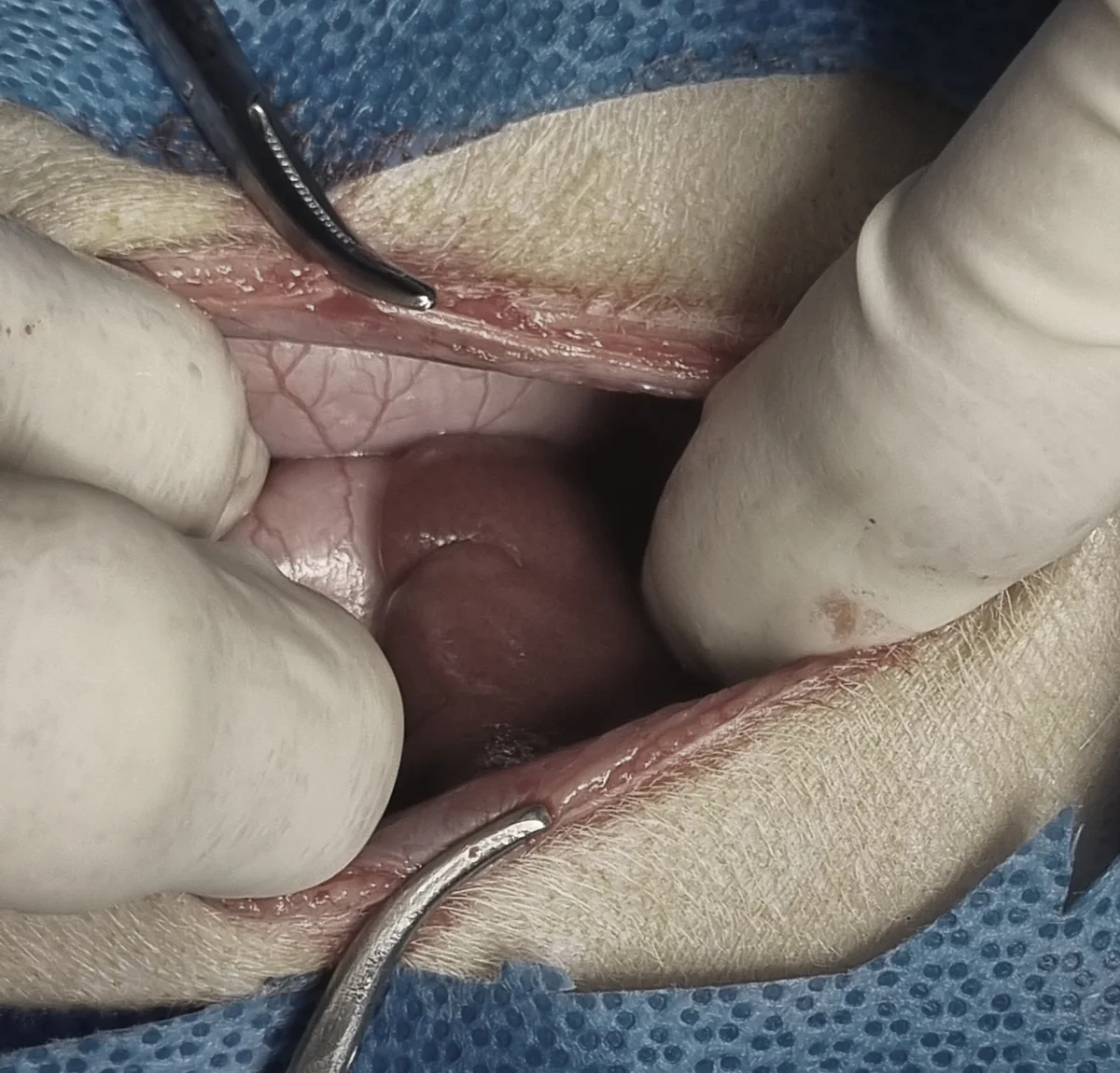
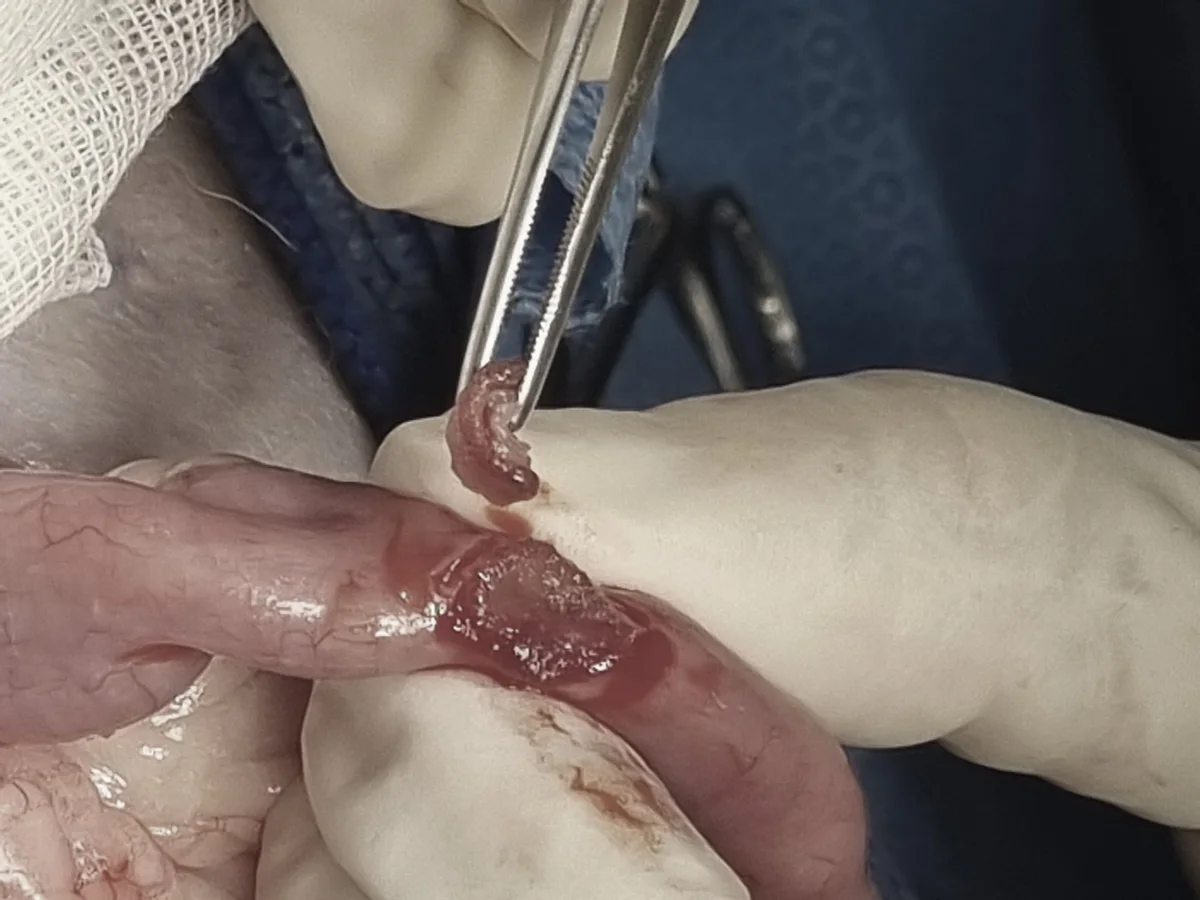
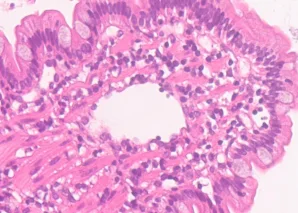
Histopathology showed mild, diffuse lymphocytes and plasma cells in the lamina propria of the small intestine, with no erosions or ulcers and no malignancy. Other diseases were ruled out and treatment focused on inflammatory bowel disease (chronic enteropathy).
How was Ara treated?
- Restoring vascular protein to recover oncotic pressure
- Controlling inflammation with steroids, plus an immunosuppressant for long-term control
- Albumin transfusions when values dropped sharply
- Ultrasound-guided drainage of chest and abdominal fluid to ease breathing and abdominal discomfort
- Regular monitoring of albumin, liver values and inflammation, adjusting doses to Ara's condition
How did albumin change over time?
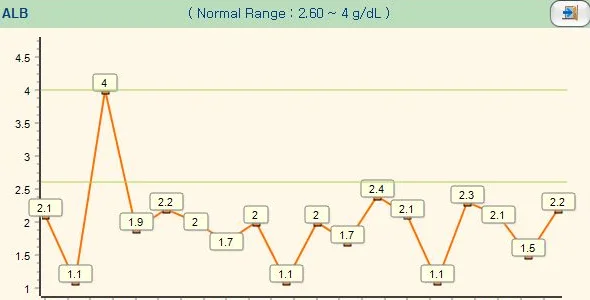
Albumin started at 1.9 g/dL and repeatedly stayed in the 1–2 g/dL range. Each time it fell to the low 1s, albumin transfusions and dose adjustments brought it back up. It never stayed fixed within the normal range, but active intervention kept it from remaining dangerously low, and Ara has been well managed over the long term.

A word from the director
Chronic enteropathy is a condition to manage over the long term rather than cure. With long-term steroids and immunosuppressants, managing side effects matters as much as the benefits, so the goal was to keep albumin in a stable range with as few side effects as possible. Treatment is not only about numbers but also about pain and quality of life. If your dog has recurrent diarrhea and poor appetite and you have been told albumin is low, start with tests to find the cause.