
Before and after scaling
Canine and molar area
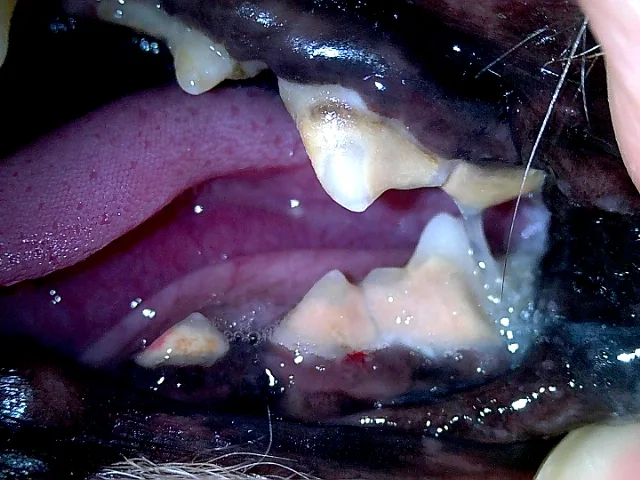
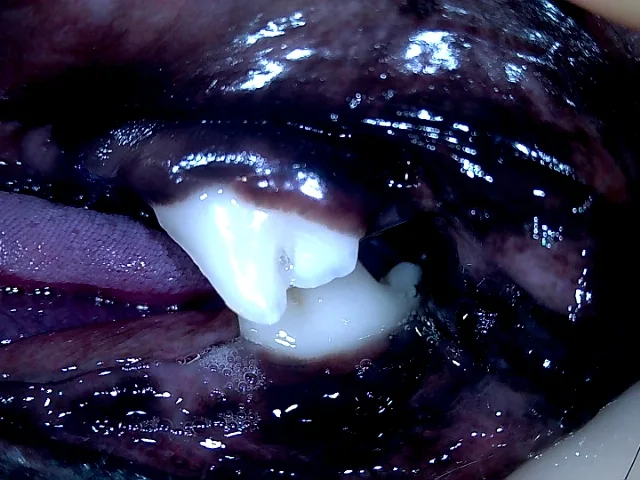
Left: tartar covering the canine and molars with inflamed gums / Right: tartar removed and tooth surfaces clean after scaling
Incisor area
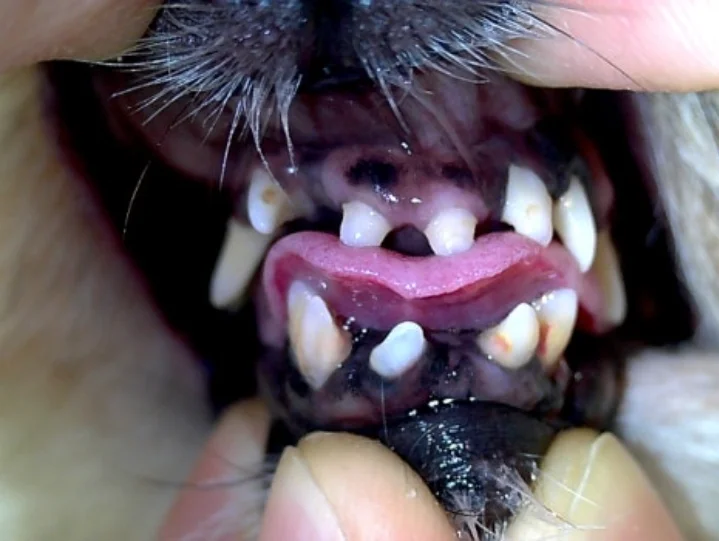
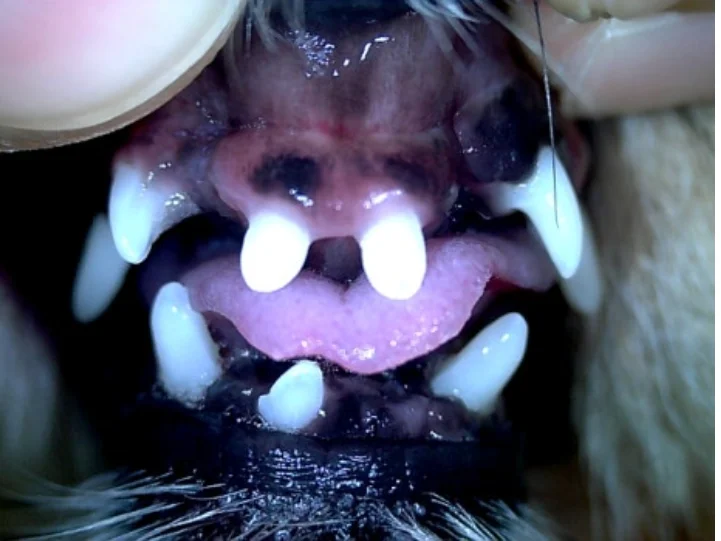
Left: yellow tartar on the incisors and canines, some teeth missing / Right: clean, white teeth after tartar removal
Key points
- Patient: 7-year-old female toy-breed dog, 1.91 kg
- Underlying conditions: seizures managed with anticonvulsants since 2023; hypothyroidism on hormone therapy
- Treatment: full pre-anesthetic work-up → low-dose, stepwise anesthesia → dental radiographs → scaling and extractions → multimodal pain management
- Outcome: no seizures during anesthesia or recovery; extraction sites healed and normal eating confirmed 3 days later
Can a dog with a seizure history have a dental cleaning under anesthesia?
Yes, with thorough pre-anesthetic evaluation and an anesthetic plan tailored to the patient. Anesthetic drugs, stress and body-temperature changes can trigger seizures, so preparation must be far more careful than usual. We start by reviewing current anticonvulsants, the timing and frequency of recent seizures and overall health, then choose drugs with a low likelihood of provoking seizures.
Dental cleaning is not just removing visible tartar. Plaque and calculus below the gumline must be cleaned as well, which requires general anesthesia to prevent pain and movement. Whether anesthesia can be done safely therefore decides whether dental treatment can be done at all.
What was Duri's condition?
| Patient | Duri (alias), 7-year-old female toy-breed dog |
|---|---|
| Weight | 1.91 kg |
| Conditions | Seizures (on anticonvulsants since 2023), hypothyroidism (on hormone therapy) |
| Reason for visit | Bad breath, gum bleeding, change in eating speed |
The oral exam showed moderate or worse tartar and gingivitis around the canines and molars, some missing teeth, and a gum mass. Treatment could not be postponed without risking further pain and infection.
What did we check before anesthesia?
With a tiny body size and a seizure history, Duri was a high-risk patient, so most of our effort went into reducing anesthetic risk in advance.
- Heart and lung auscultation, breathing, temperature and blood pressure
- Chest radiographs
- Abdominal ultrasound
- Blood tests (organ function, pancreatic marker, thyroid hormone)
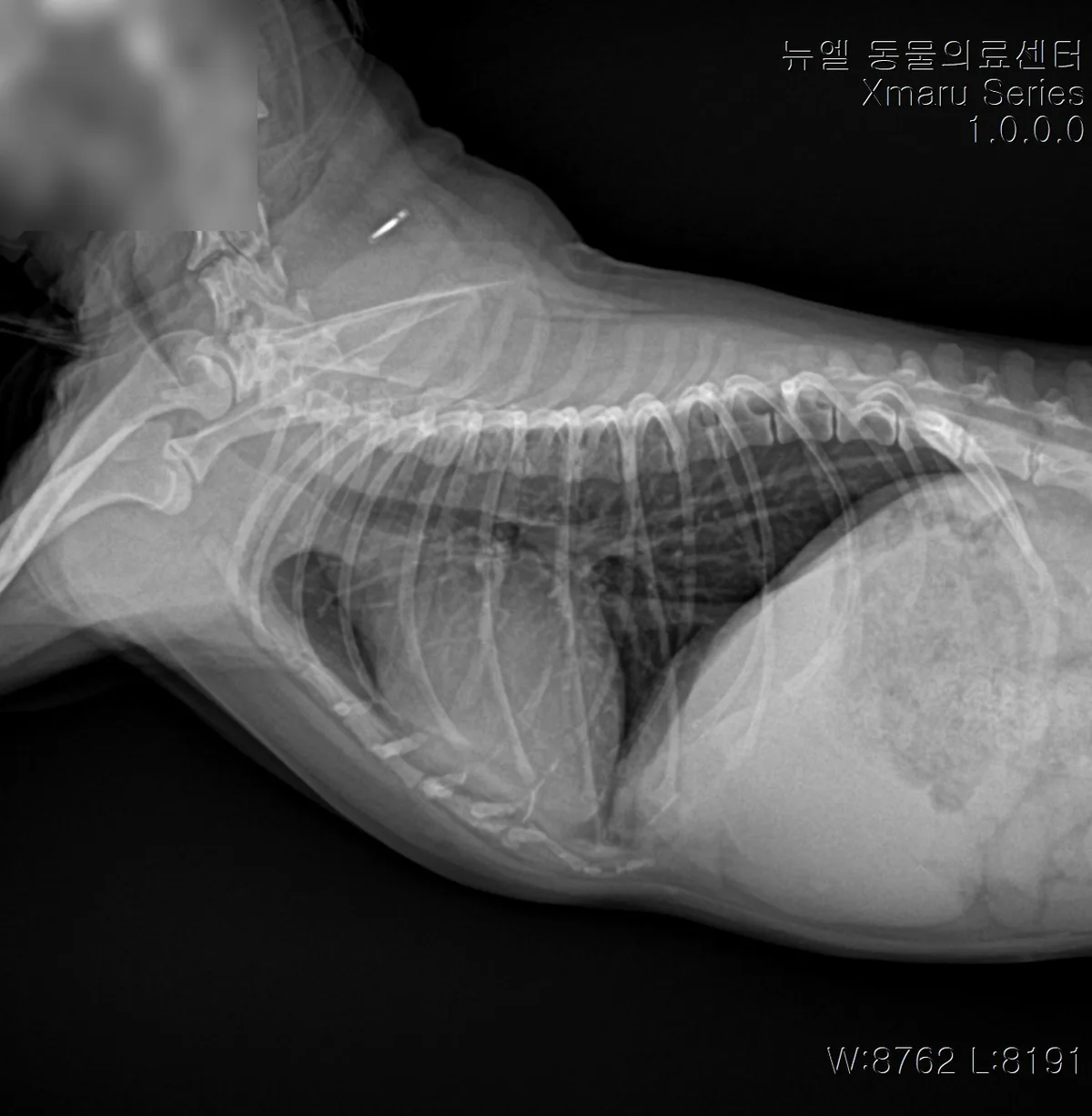
| Test | Result | Reference | Relevance |
|---|---|---|---|
| Pancreatic Lipase | 225.3 U/L ↑ | 0–125 | Possible pancreatic strain; considered in drug choice and recovery care |
| T4 (thyroid hormone) | 1.27 µg/dL ↓ | 1.3–4.5 | Hypothyroid state; considered in metabolic and temperature management |
How was anesthesia performed?
We used a low-dose, stepwise induction, deepening anesthesia gradually while watching the response, to avoid excessive drug effect in a very small patient and to minimize stimuli that could trigger a seizure.
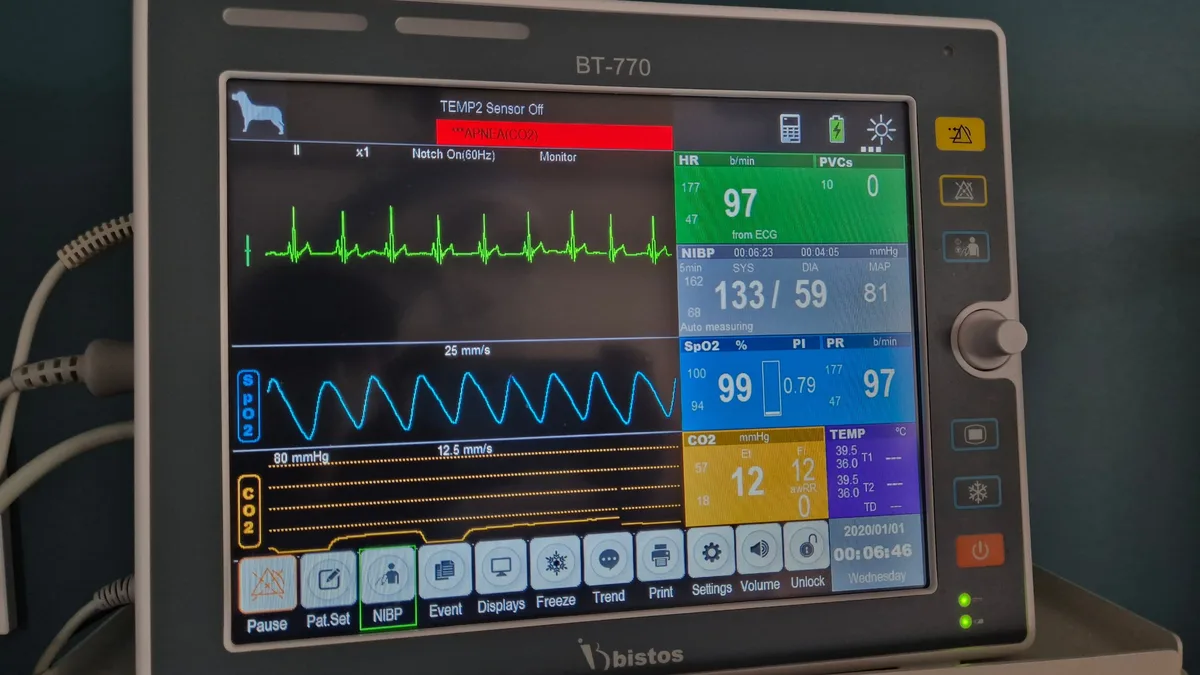
During maintenance we monitored ECG, blood pressure, oxygen saturation, breathing (end-tidal CO₂) and body temperature in real time, with active warming because toy breeds lose heat quickly. Her regular anticonvulsant was continued without interruption.
What dental treatment was done?
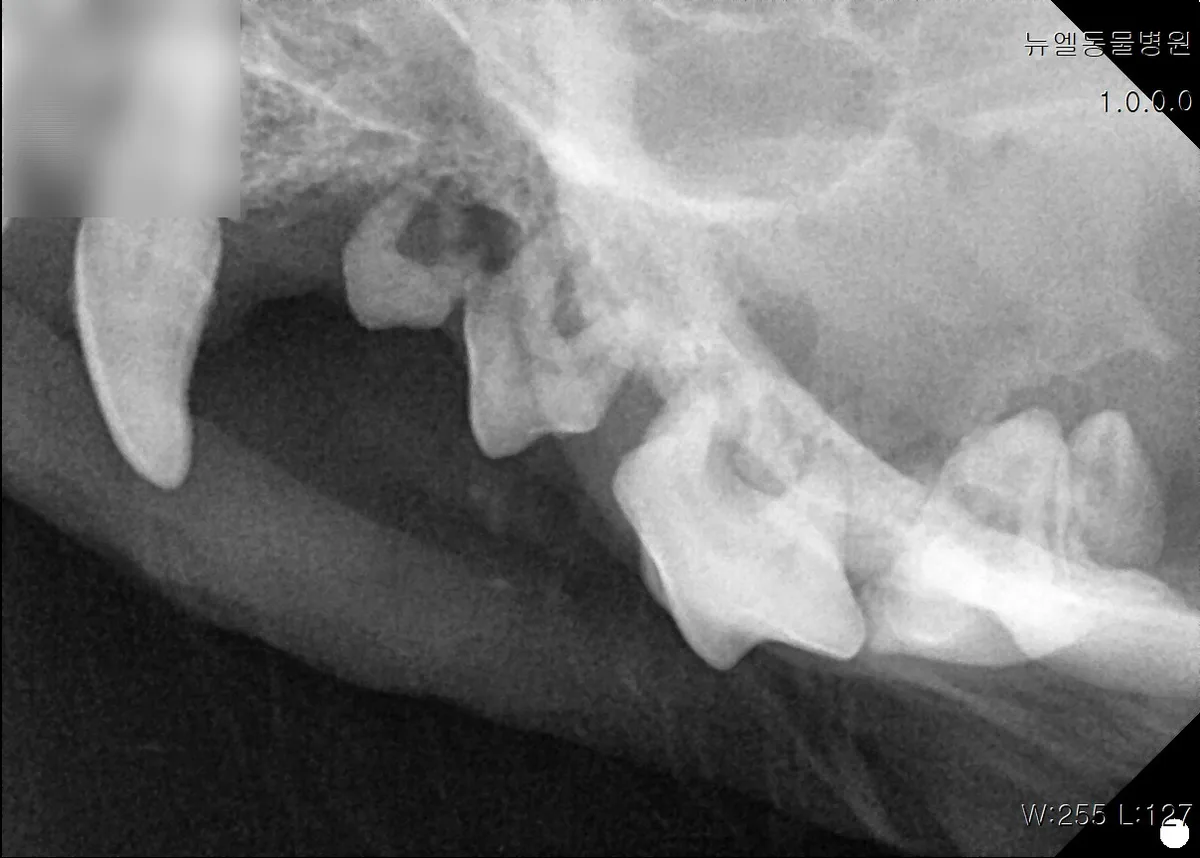
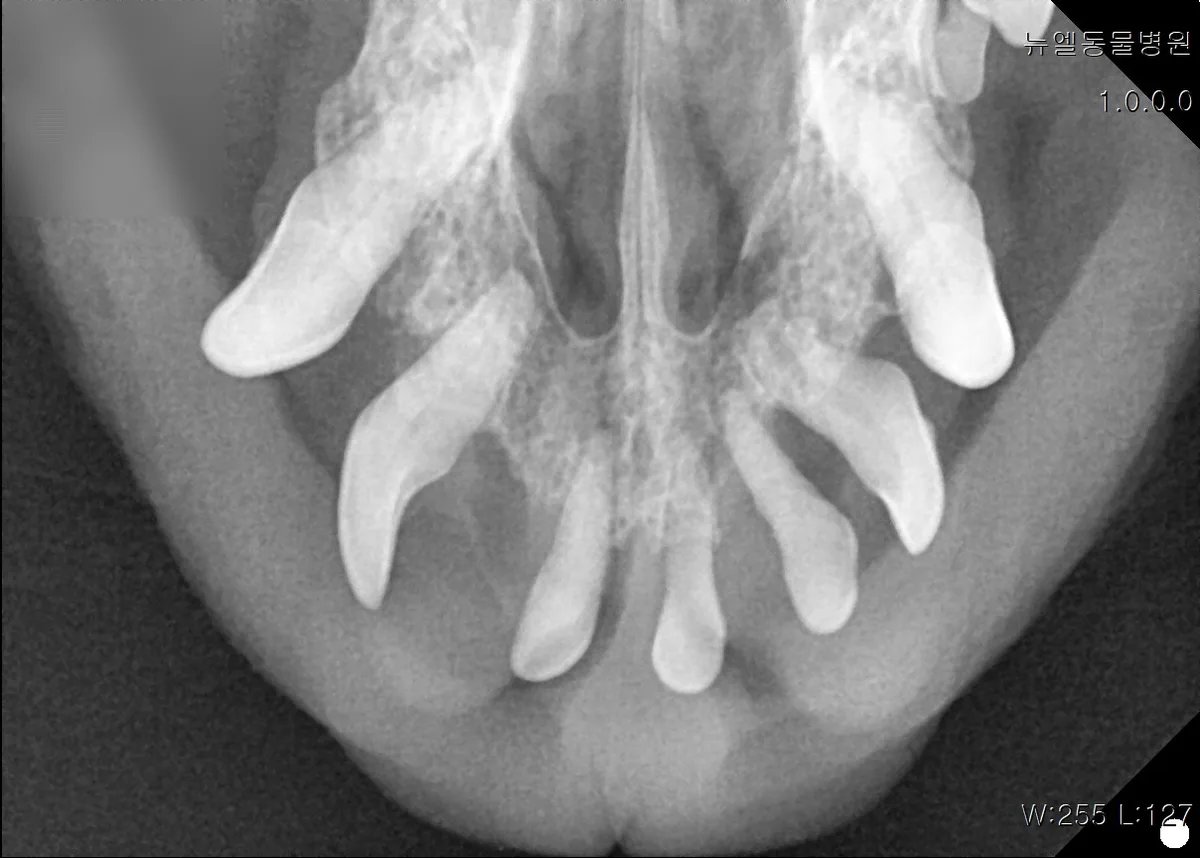
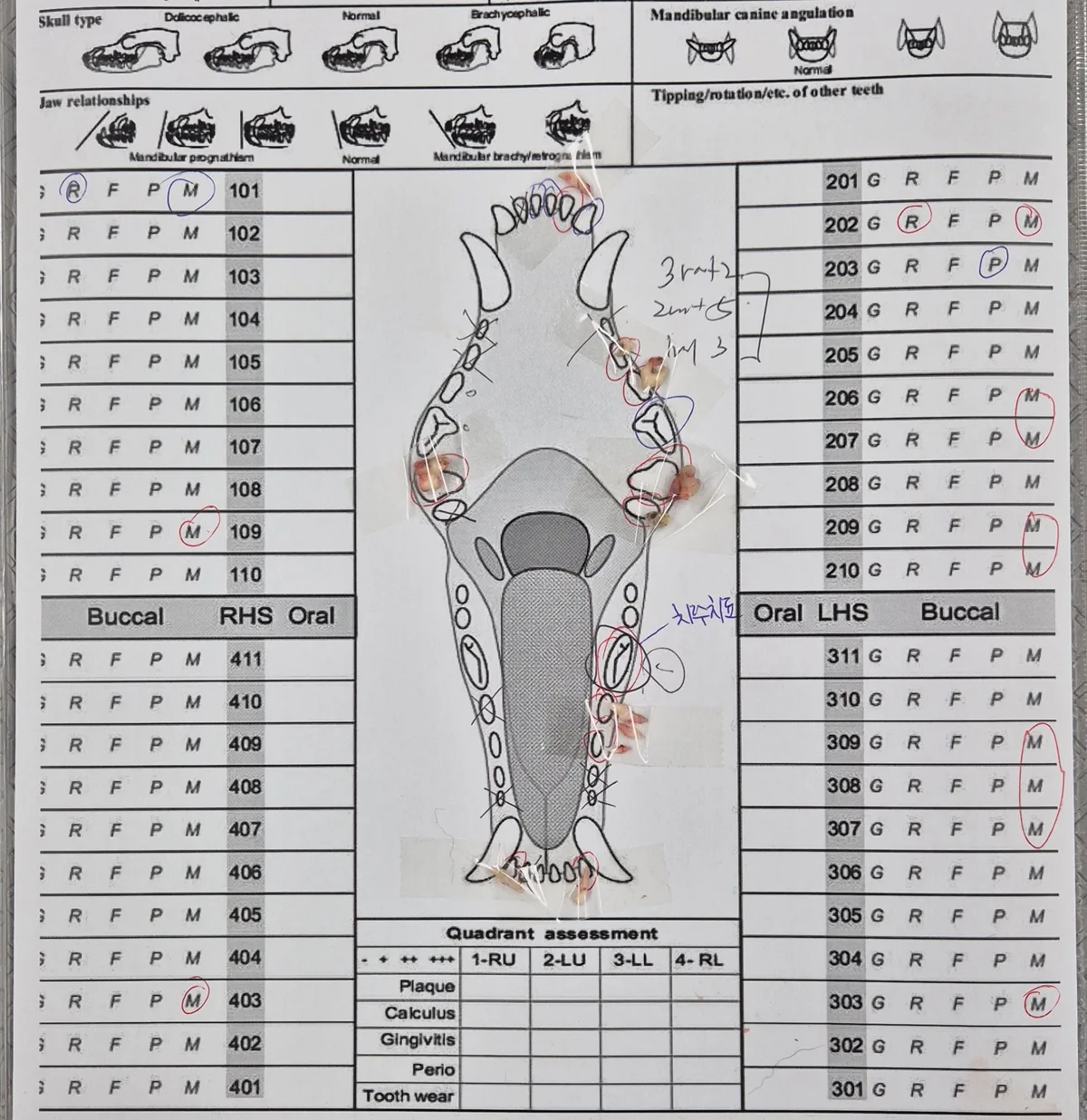
Dental radiographs were taken first to assess roots and surrounding bone, which decide which teeth can be kept.
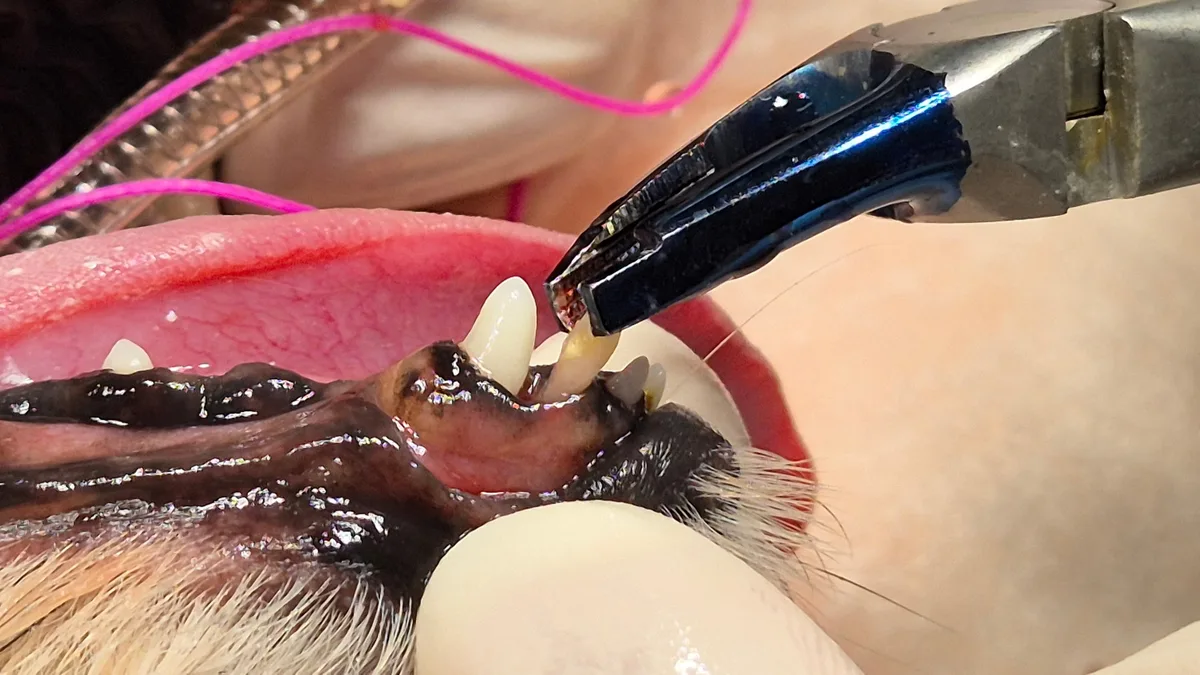
Tartar around the canines and molars was then removed with an ultrasonic scaler and the inflamed gums cleaned, including along the gumline.
Before and after scaling
Canine and molar area
Left: tartar covering the canine and molars with inflamed gums / Right: tartar removed and tooth surfaces clean after scaling
Incisor area
Left: yellow tartar on the incisors and canines, some teeth missing / Right: clean, white teeth after tartar removal
Teeth with exposed roots, severe mobility or advanced inflammation were extracted, and the sites were flushed, hemostasis achieved and closed with absorbable sutures.
How were pain and seizures managed during recovery?
We applied multimodal pain management from the moment treatment ended, combining an anti-inflammatory analgesic, a muscle relaxant and a gastroprotectant. Because pain and stress can trigger seizures, pain control in these patients is a matter of safety, not only comfort. Neurological status was observed throughout recovery.
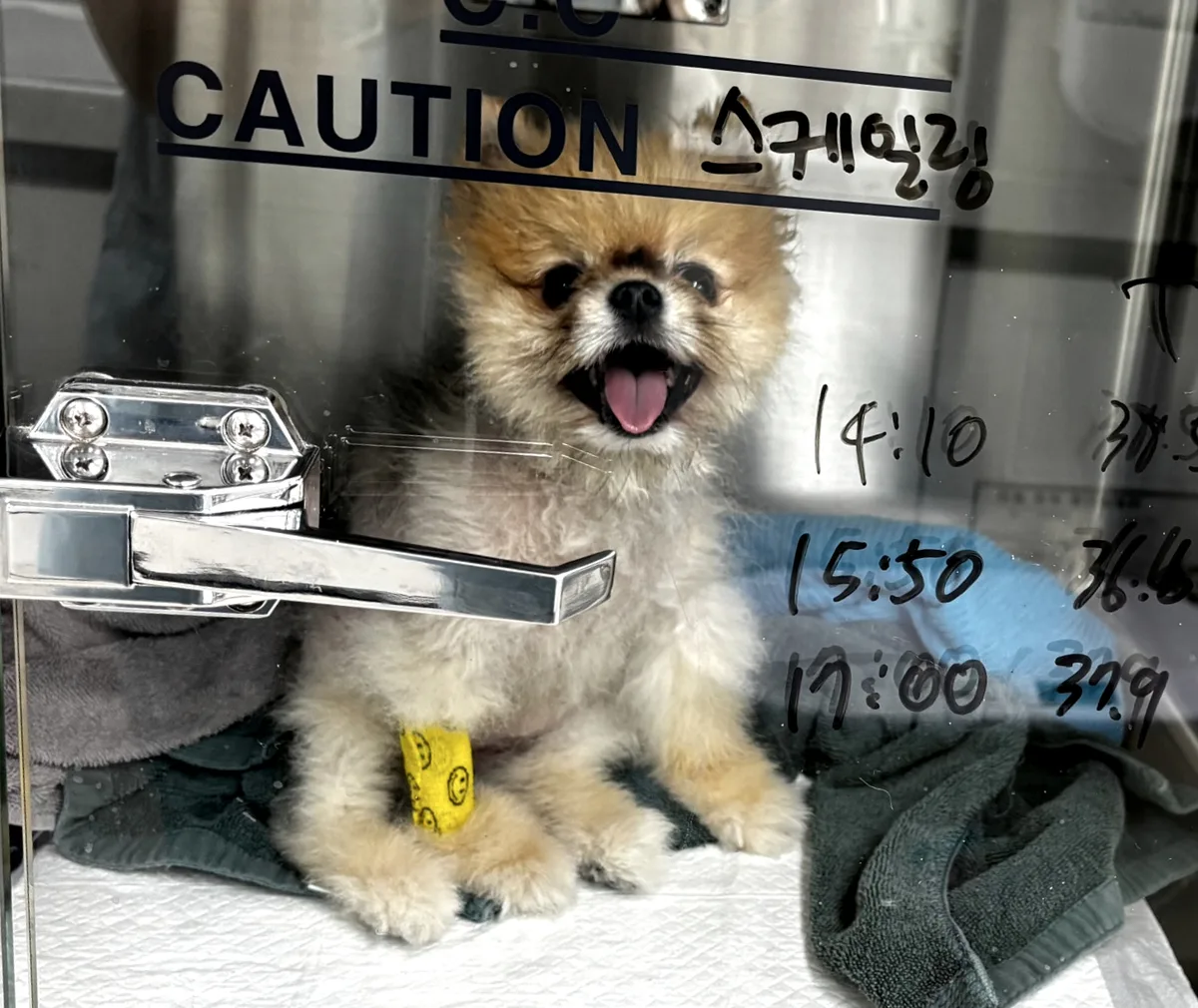
Duri woke up smoothly without seizures, and her appetite and energy returned quickly. At the recheck 3 days later the extraction sites had healed cleanly and she was eating normally. She has since returned to her everyday life.
Follow-up care
- Ongoing pain assessments
- Regular review of anticonvulsant dose and response
- Monitoring for stress-related seizures together with the owner
- Regular dental check-ups and home tooth-brushing guidance
- Immediate visit if appetite drops or a seizure is suspected
A word from the director
Duri carried a heavy anesthetic burden: a seizure history, hypothyroidism and a body weight under 2 kg. Three things mattered most: thorough pre-anesthetic evaluation, a tailored low-dose stepwise anesthetic with close monitoring, and active control of pain and stress during recovery. Outcomes differ between patients, but an underlying condition does not automatically rule out dental care. If seizures or endocrine disease have made you hesitate about a dental cleaning, please talk with us first.