
Before and after scaling and periodontal care
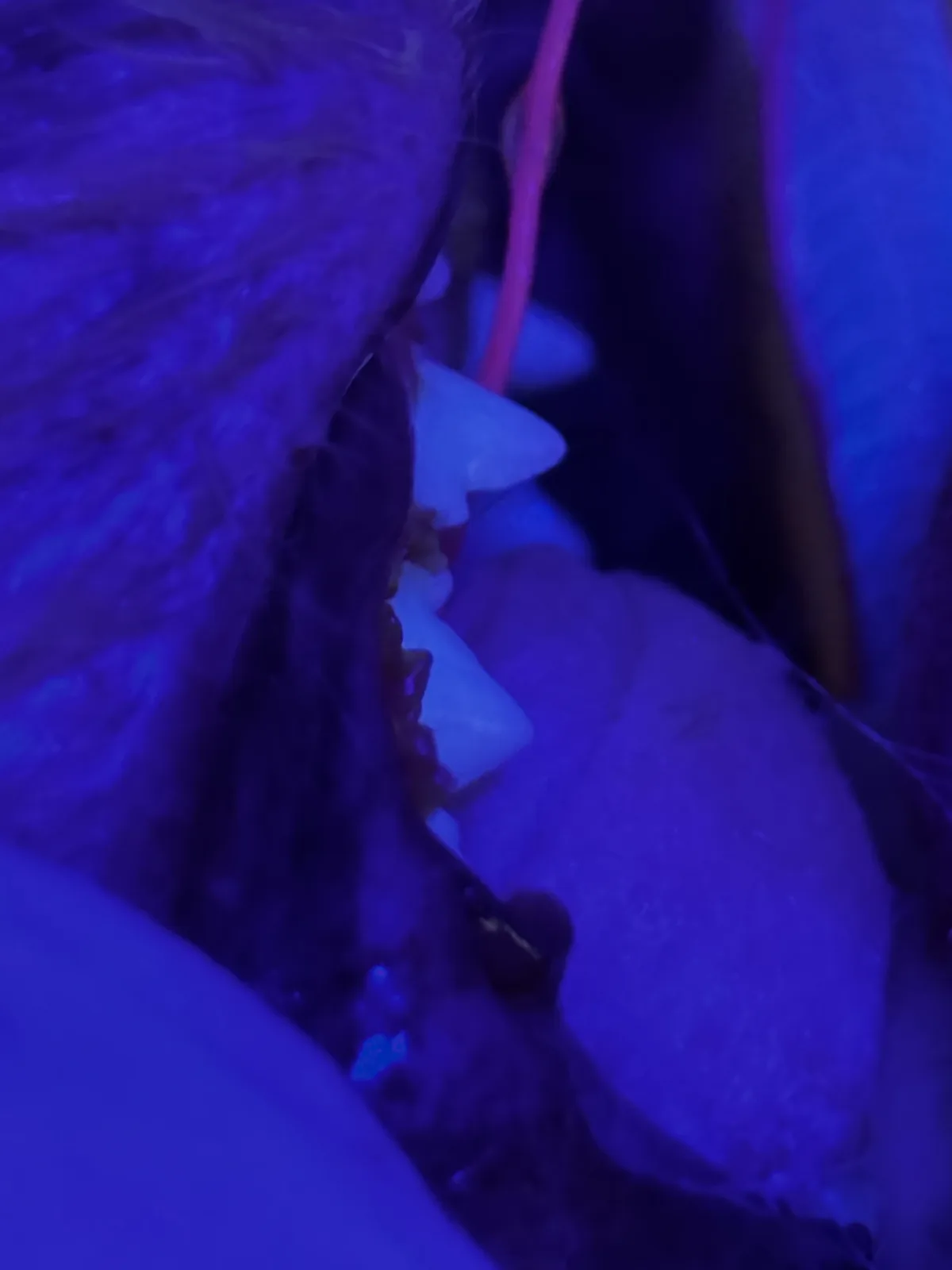
Gums around the incisors and canines
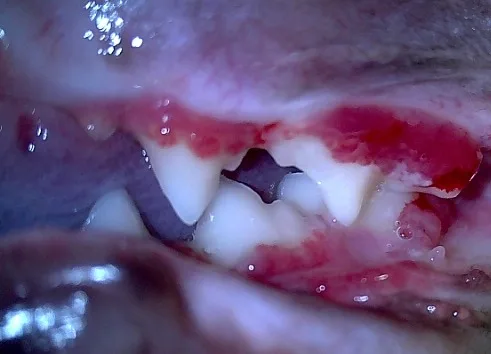
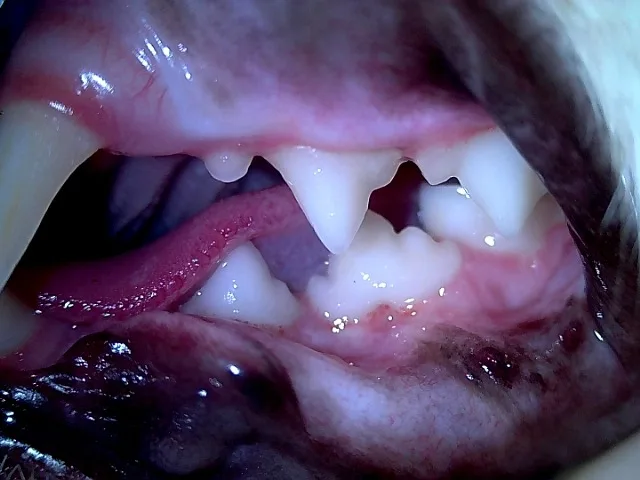
Left: red, swollen, bleeding gums / Right: calmer gums one month later
Key summary
- Patient: 1-year-old cat spilling food
- Diagnosis: Juvenile periodontitis
- Treatment: Scaling and periodontal care
- Result: Gum redness clearly eased
What is juvenile periodontitis in cats?
Juvenile periodontitis is a gum and tooth-support disease that appears early in life, typically between a few months and 2 years of age. Unlike ordinary periodontitis, which develops slowly as tartar and bacteria build up, it can cause severe gum inflammation and rapid tissue damage in a short time.
It is not explained by poor oral hygiene alone. An abnormal immune response, changes in the oral bacterial environment and genetic factors are thought to act together.
Typical signs include:
- Red, swollen gums that bleed easily
- Bad breath and increased drooling
- Discomfort when eating and difficulty chewing kibble
- In advanced cases, loose teeth or early tooth loss
Why did Mochi come in?
| Patient | Mochi (alias), 1-year-old neutered male cat |
|---|---|
| Signs | Spilling food since losing baby teeth; tears welling up during meals |
An active cat who looked uncomfortable only while eating, again and again, did not seem like a simple habit, so the family brought him to Nuel Animal Medical Center.
How did we tell simple gingivitis from periodontitis?
The oral exam showed clearly reddened gum margins and swelling in some areas. To tell whether this was gingivitis (inflammation of the gums only) or periodontitis (inflammation that reaches the ligament and bone supporting the tooth), we took dental radiographs.
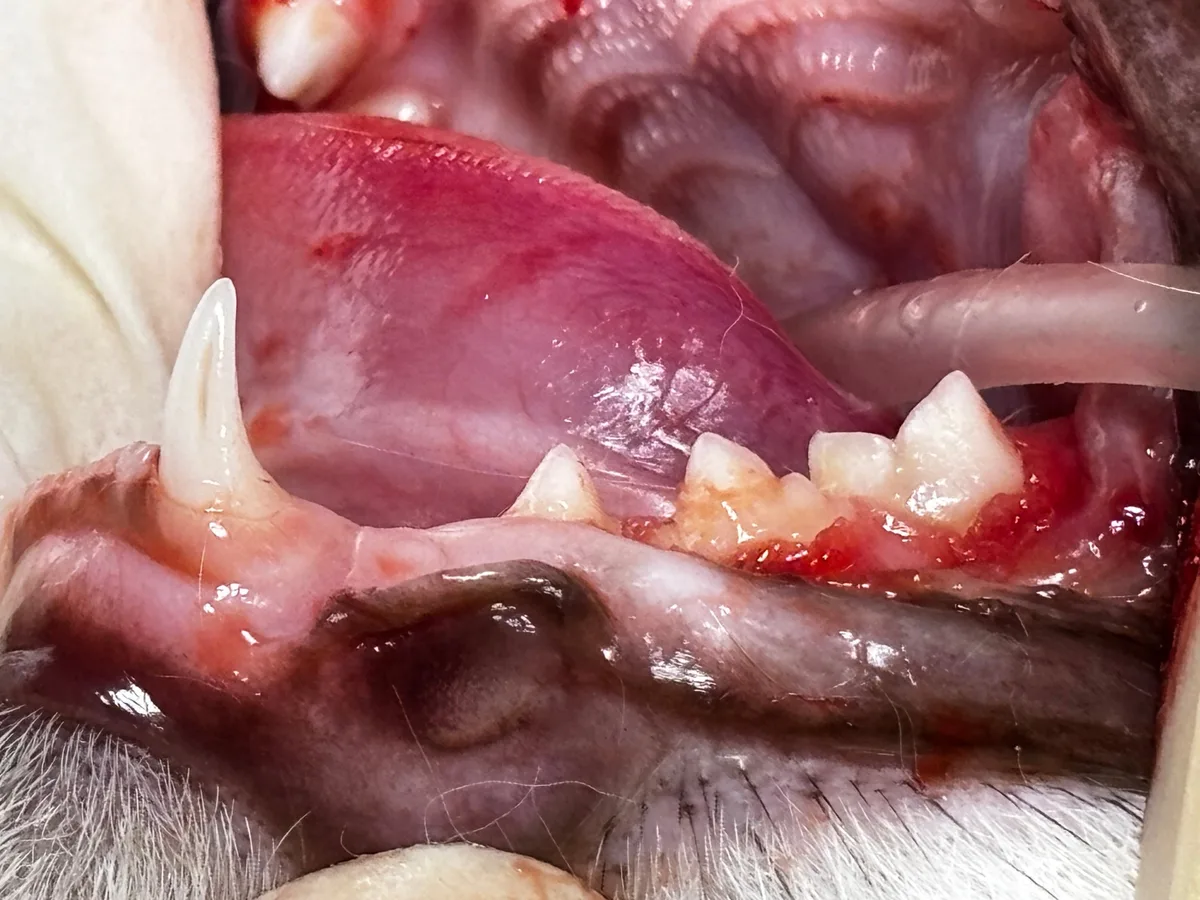
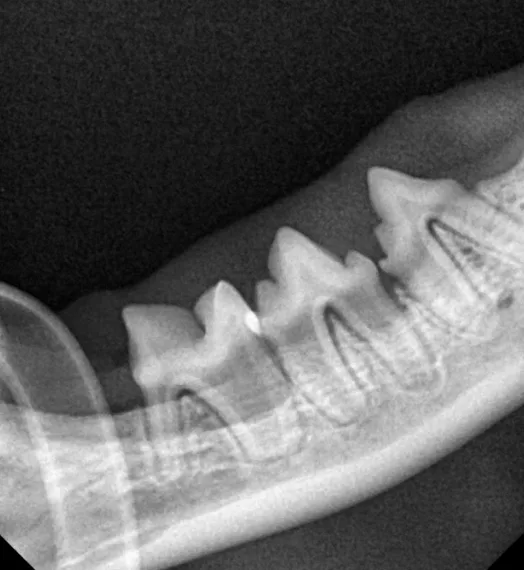
The radiographs showed no periodontal changes or tooth resorption. Still, the inflammatory response was clear for such a young age, so we diagnosed juvenile periodontitis. We also noted that a small right lower premolar rubbed the gum when the mouth closed, so bite irritation was considered as well.
How was it treated?
1. Scaling to remove the cause of inflammation
We first removed plaque and tartar by scaling. Cleaning bacterial film hidden under the gum line is key to reducing the chance of inflammation returning. We finished with polishing to smooth the tooth surface.
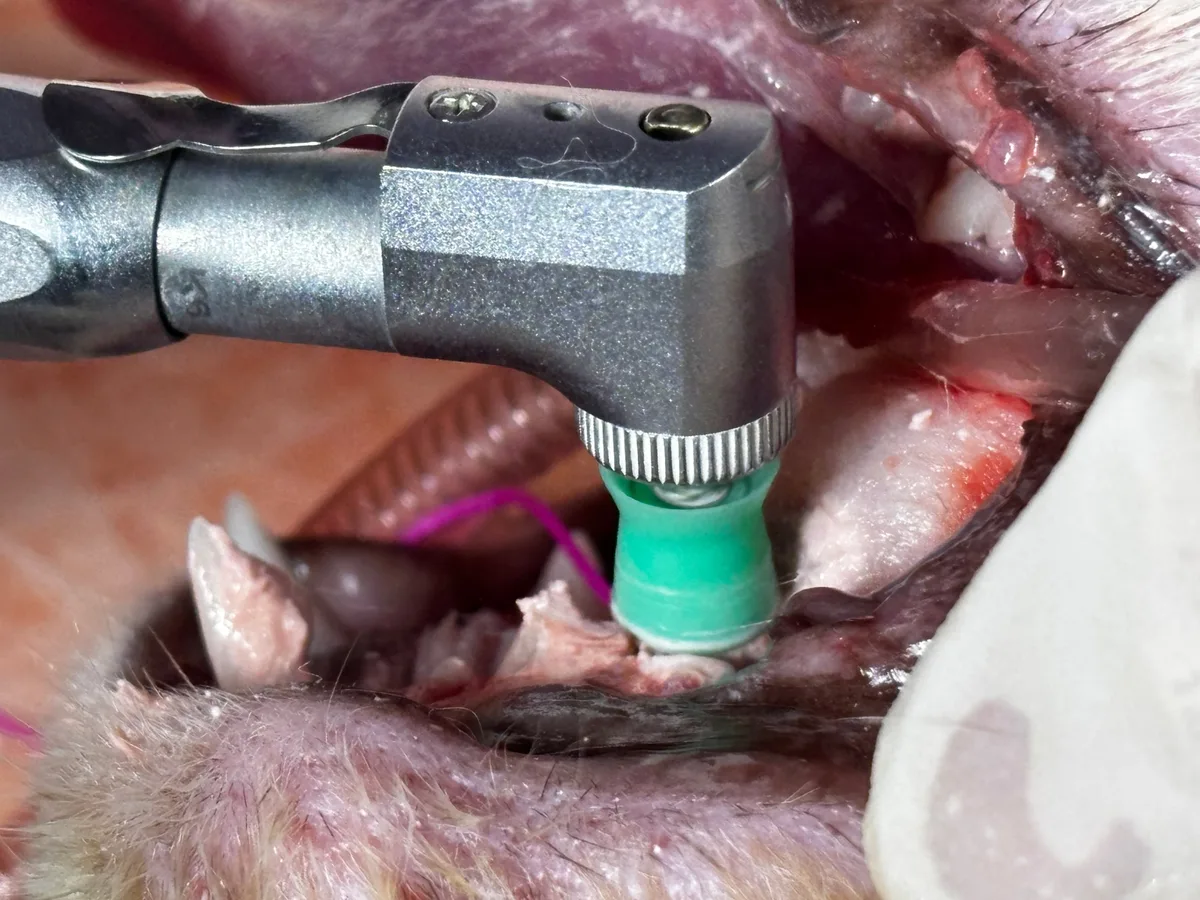
2. Calming residual inflammation
To settle the remaining inflammation, we used an antibiotic to lower the bacterial load and give the gum tissue room to recover, with omega-3 as supportive care.
3. Home brushing plan
We showed the family a brushing video, explained the technique, and asked them to focus on daily care with a prescribed toothpaste.
Before and after comparison
Gums around the incisors and canines
Left: red, swollen, bleeding gums / Right: calmer gums one month later
How did Mochi do afterward?
At the first recheck, the gum redness had clearly eased, and the food spilling and tearing during meals had decreased. Thanks to steady brushing at home, plaque build-up was well controlled.
At a later recheck, localized redness reappeared around the right lower premolar. Because it recurs in the same spot, we are continuing focused care and regular monitoring.
How should this be managed at home?
Juvenile periodontitis is not something a single treatment resolves.
- Regular scaling: Keep up periodic cleanings before plaque builds up.
- Brush once a day: Daily brushing at home matters most.
- Watch for pain signals: If food spilling or tearing while eating returns, have it checked promptly.
Director's comment
Periodontitis in a young cat can lead to alveolar bone damage within a short time if left alone. In this case, the family came in as soon as they noticed early changes, so we could aim to preserve the permanent teeth.
Even young cats can develop inflammation without good care. We recommend regular brushing and scaling going forward; checking even small changes early is the way to protect dental health for life. Recovery varies from cat to cat.
This case is also featured on Nuel Animal Medical Center's Naver blog.