
Walking Before and After Injection
Top: somewhat stiff gait before treatment / Bottom: smoother gait after treatment
Key Summary
- Patient: 16-year-old cat, can't jump
- Diagnosis: Degenerative arthritis
- Treatment: Pain-relief injection plus integrated care
- Result: Better gait, jumping, activity
Can a Cat That Stops Jumping Have Degenerative Arthritis?
When a cat stops jumping to high places or becomes less active, it may not be simple aging. Degenerative arthritis occurs when joint cartilage wears down or is damaged, causing inflammation and pain. It is common in senior cats because cartilage naturally wears with age and the joint fluid that protects it decreases.
It mainly affects weight-bearing joints such as the knees, hips, elbows and spine. Damaged cartilage rarely recovers, so the condition is often chronic. Aging is the most common cause, but obesity, congenital problems such as hip dysplasia, past fractures or ligament injuries, and infectious or immune-mediated disease can also contribute.
Cats rarely show pain openly, so owners may miss it. Typical signs include:
- Reluctance to climb up or jump down
- Stiff walking or limping
- Difficulty using the litter box or going outside it
- Less activity and more sleeping
- Sensitivity when touched
What Condition Was Leo in When He Visited?
| Patient | Leo (pseudonym), 16-year-old male cat |
|---|---|
| Underlying disease | Hyperthyroidism, managed with medication |
| Signs | Reduced movement, unable to jump onto the sofa and only crying below it, uncomfortable gait |
Leo was already a quiet senior cat, but when he could no longer reach the sofa, his owner brought him to Nuel Animal Medical Center.
How Was the Arthritis Diagnosed and Whole-Body Health Checked?
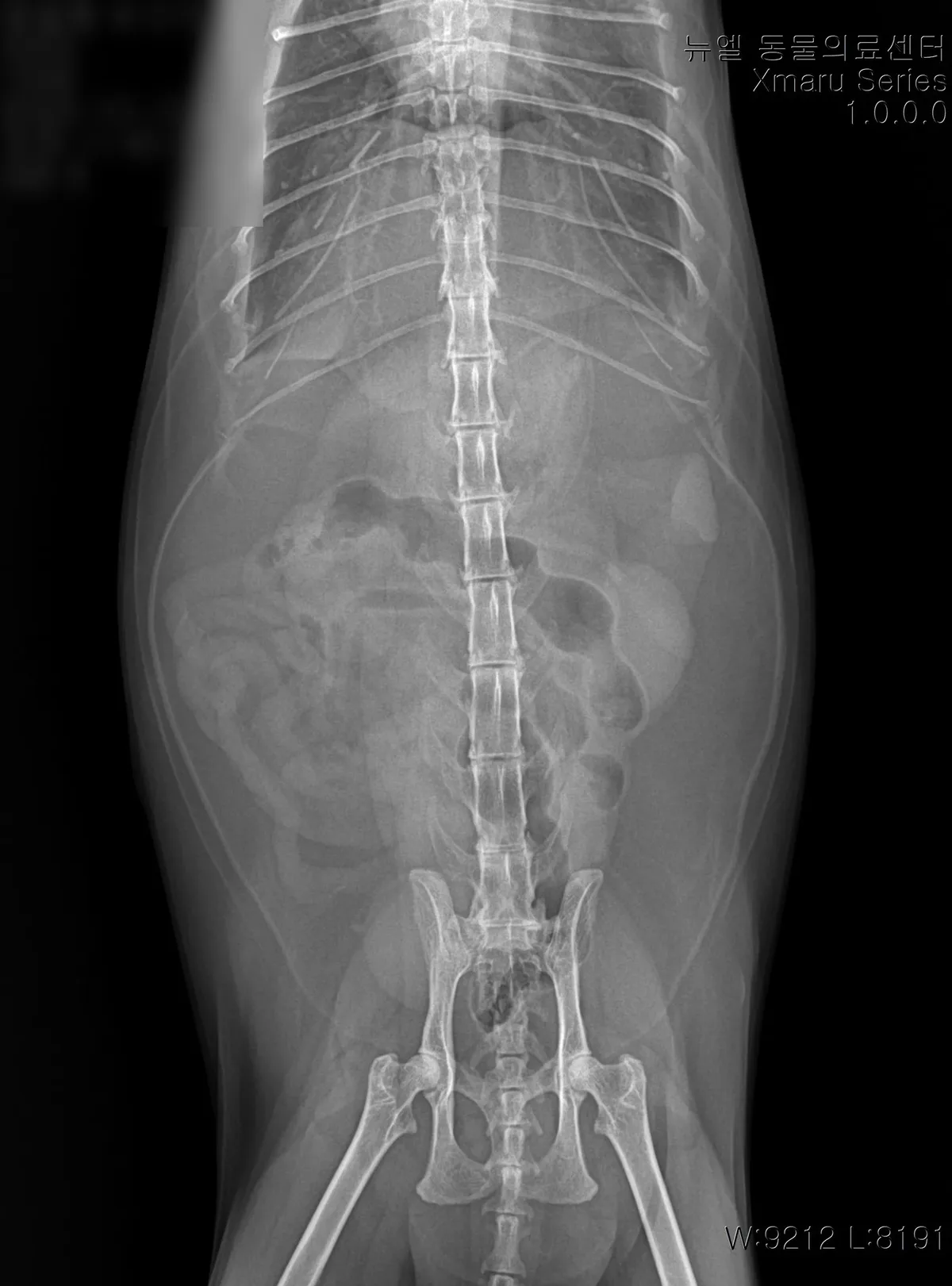
We first assessed gait and pain through history and a physical exam. We palpated the joints and flexed and extended the legs to check pain responses and range of motion, and found stiffness and pain reactions.
We then ran radiographs, blood tests, blood pressure measurement and auscultation to evaluate his overall health.
| Test | Result | Reference | Meaning |
|---|---|---|---|
| T4 (thyroid hormone) | 2.12 µg/dL | 1–4 | Normal; hyperthyroidism stable on medication |
| proBNP (cardiac marker) | 489.8 pmol/L | 0–100 | Elevated; ongoing cardiovascular monitoring needed |
| Blood pressure | 190 mmHg | - | Measured high |
| Auscultation | Heart murmur detected | - | Follow-up of the cardiovascular system needed |
Leo's problem was not only his joints. He also had hyperthyroidism, high blood pressure and an elevated cardiac marker. So we built a single integrated plan that treats joint pain while monitoring these underlying conditions.
How Was He Treated?
1. Arthritis Pain-Relief Injection
To relieve chronic pain from degenerative arthritis, we started a monthly subcutaneous pain-relief injection. It works by blocking nerve growth factor (NGF), which is involved in pain signaling.
Before treatment Leo walked somewhat uncomfortably and moved less, and his owner was most worried about his inability to jump. We then gave the injection at roughly one-month intervals, up to three doses.
2. Monitoring Underlying Conditions
During treatment we continued managing the hyperthyroidism and checked his overall status with regular blood tests and cardiovascular monitoring.
3. Changes After Treatment
After the injection, his gait became noticeably smoother. He jumped more, was more active and scratched more, moving more comfortably than before, and his owner noticed the positive change. He continues to receive the same injection to maintain this.
Walking Before and After Injection
Top: before / Bottom: after. Response varies from cat to cat.
How Should I Care for My Cat at Home After Treatment?
Degenerative arthritis is a chronic condition that needs steady management rather than a one-time fix. Very senior cats can be affected by even small changes in their environment.
- Flooring: Lay rugs or non-slip mats to reduce joint strain.
- Weight and activity: Keep a healthy weight and encourage comfortable, self-paced movement rather than forced exercise.
- Injection schedule: This pain-relief injection is recommended about every four weeks, so keep to the schedule.
- Observation: Watch for changes in jumping, activity and gait.

Director's Comment
Very senior pets, like Leo, often have several underlying conditions, so regular checkups and careful management are essential. With chronic disease, the goal is to protect quality of life through steady care rather than a cure, and the owner's cooperation makes a big difference.
At Nuel Animal Medical Center we don't look at joint pain in isolation. We plan medication, home care and needed tests around each patient, including chronic hormonal disease, blood pressure and heart status. If your cat avoids jumping or has become less active, please come in for an examination.
This case is also featured on Nuel Animal Medical Center's Naver blog.