
Before and after treatment
Flank and hips
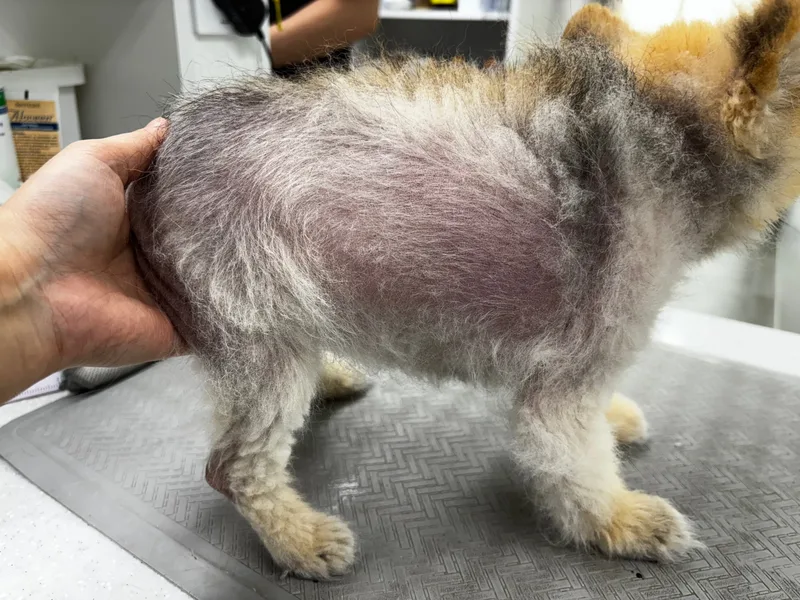
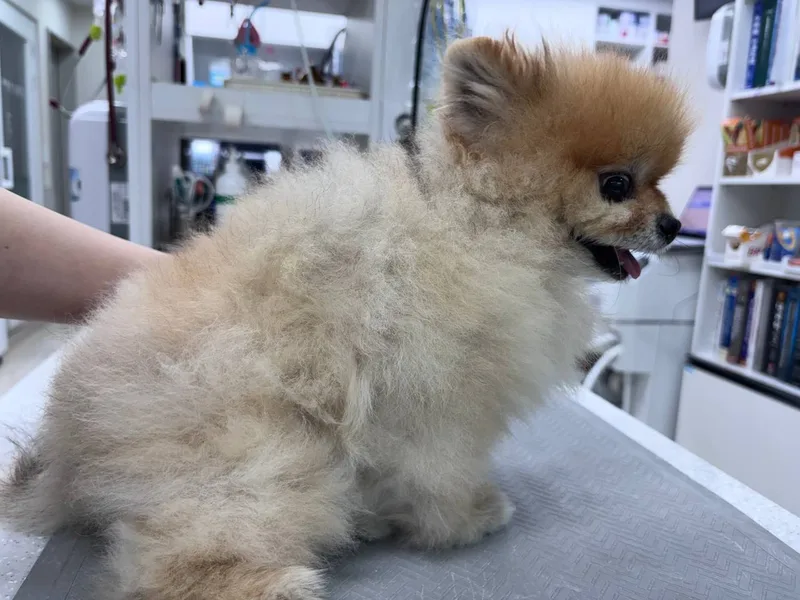
Left: symmetrical hair loss with exposed skin / Right: a full coat again
Back
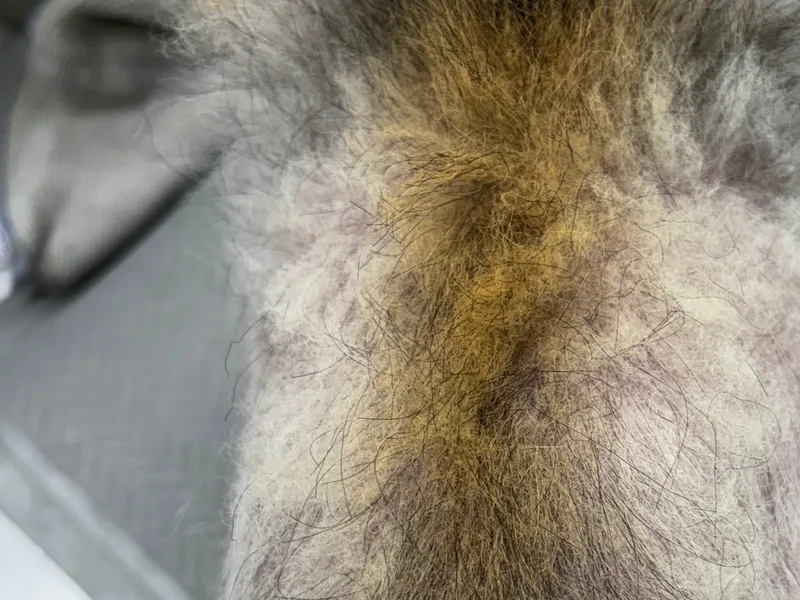
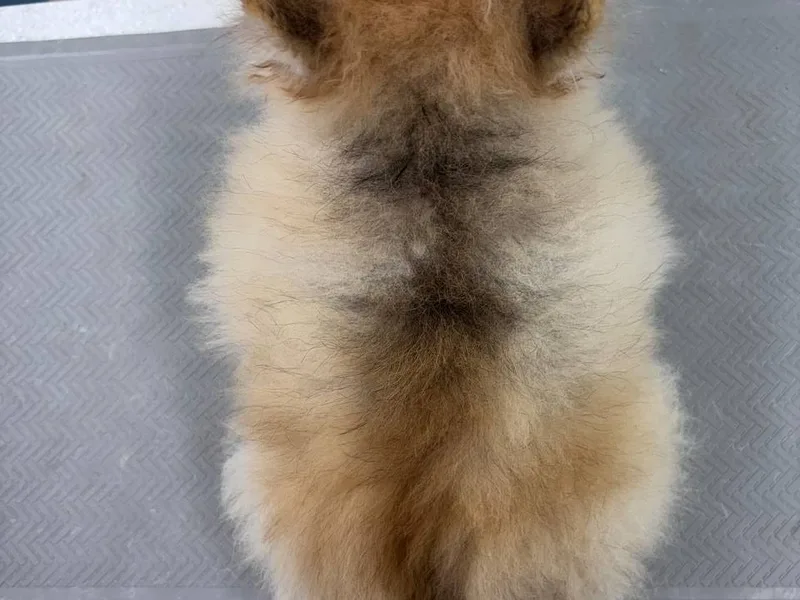
Left: sparse, thin hair / Right: coat density restored
Key points
- Patient: 7-year-old Pomeranian with widespread hair loss
- Diagnosis: hypothyroidism
- Treatment: thyroid hormone replacement and skin care
- Outcome: clear coat regrowth after about six months
What is hypothyroidism in dogs?
Hypothyroidism is an endocrine disease in which the thyroid gland makes too little hormone, slowing the body's metabolism. Common causes are lymphocytic thyroiditis, where the immune system attacks the thyroid, and idiopathic thyroid atrophy. Tumors, congenital problems and some medications are rarer causes.
- Lower activity and lethargy
- Weight gain without eating more
- Feeling the cold
- Hair loss, poor regrowth, dry skin and pigmentation
Symmetrical hair loss on both sides of the body is a classic warning sign.
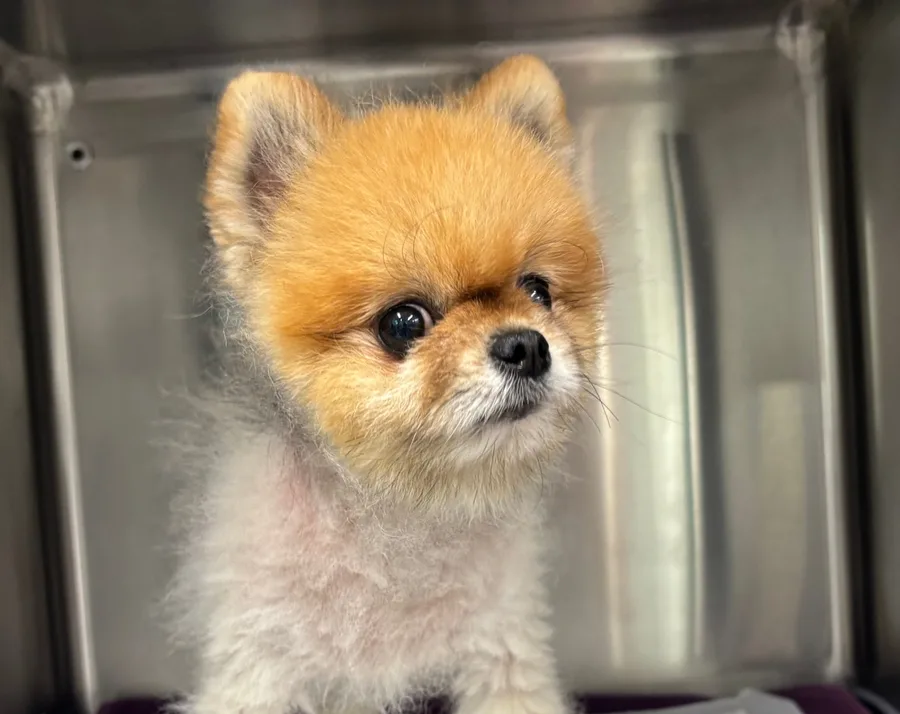
How was Heesu when she came in?
| Patient | Heesu (pseudonym), 7-year-old female Pomeranian |
|---|---|
| Signs | Thinning coat, bare hips and tail base, scaling all over, dull hair |
| History | Long-term steroid-type medication to control seizures from a neurological condition |
How did we confirm a hormonal cause?
- Skin exam: symmetrical hair loss on the trunk and hips, heavy scaling, brittle hair and poor regrowth.
- Blood test: thyroid hormone (T4) below the lower limit of measurement.
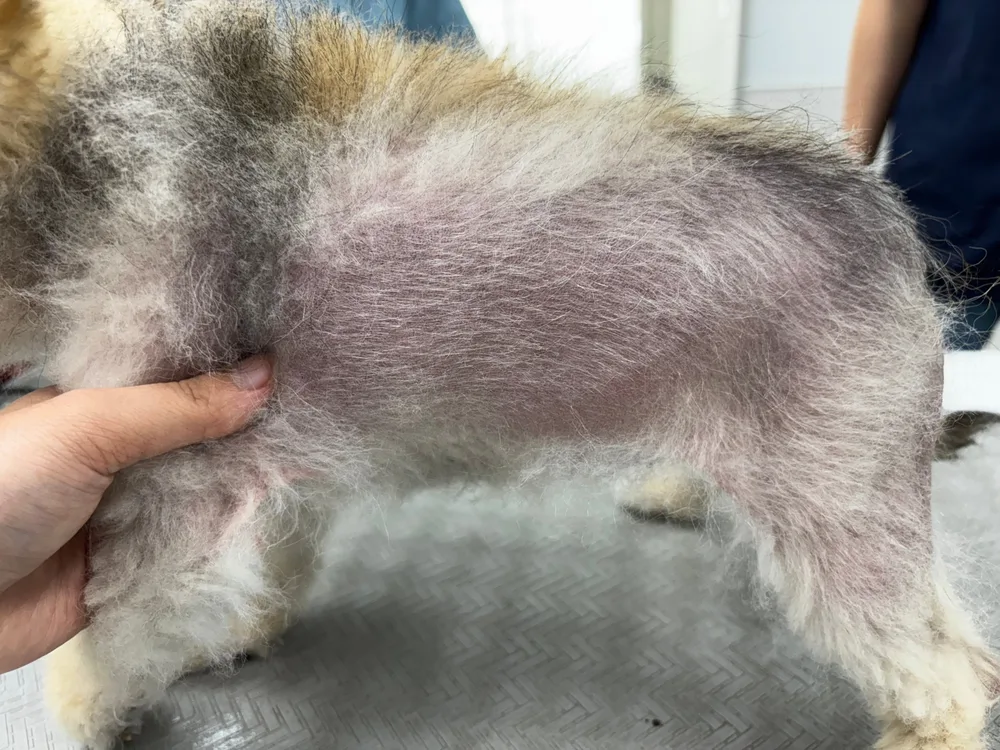
Steroid medications can lower thyroid hormone levels, so the number alone was not enough. Weighing her weight gain, low energy, symmetrical hair loss and chronic scaling together with her medication, we diagnosed hypothyroidism.
How was she treated?
We started thyroid hormone replacement, since the hormone drives skin renewal, hair growth and energy metabolism, and balanced it carefully with her seizure medication. Cleansing and moisturizing care protected her dry skin from secondary infection.
Her scaling eased and her energy returned, new hair grew over the following months, and her T4 returned to the normal range.
| Test | Before | After | Meaning |
|---|---|---|---|
| T4 (thyroid hormone) | <0.5 µg/dL (ref. 1–4) | 1.35 µg/dL (ref. 1.3–4.5) | From below measurable range to normal |
Before and after
Flank and hips
Left: symmetrical hair loss with exposed skin / Right: a full coat again
Back
Left: sparse, thin hair / Right: coat density restored
About six months in, the hair loss on her trunk and hips had clearly improved, and she remains stable with a much fuller coat.
Care at home
- Watch for renewed hair loss or scaling.
- Keep an eye on weight and energy.
- Regular hormone tests and checkups let us adjust the dose.
A word from the director
Poor hair regrowth or symmetrical hair loss can point to a hormonal disease rather than a skin problem. In dogs on long-term steroids like Heesu, test results can be affected, so medications and underlying conditions must be weighed together. Found early and managed consistently, hypothyroidism carries a good outlook.